
“Beauty doesn’t provide a solution to anything; but in these challenging times it can serve as a spacious container, a place of perspective to hold and heal our broken hearts.
May it be so.” Chris Jordan
Teboho Mokhothu
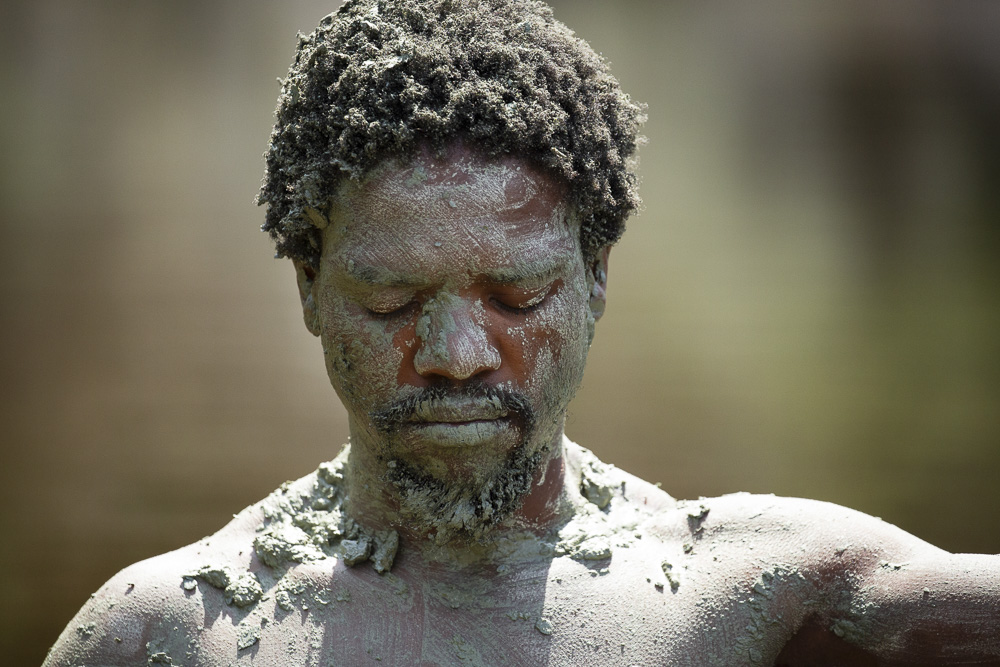
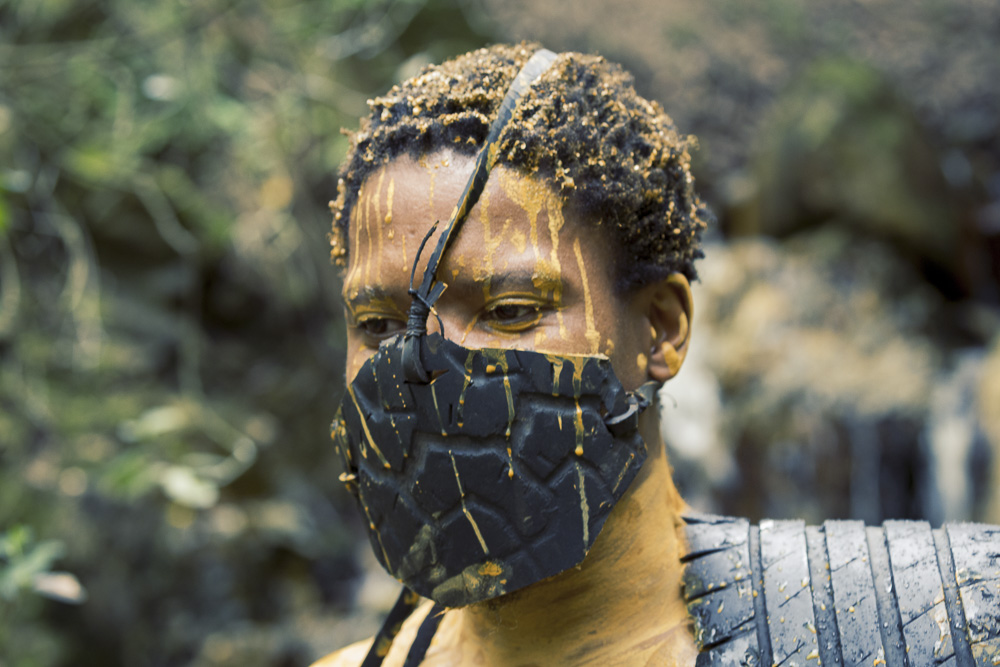
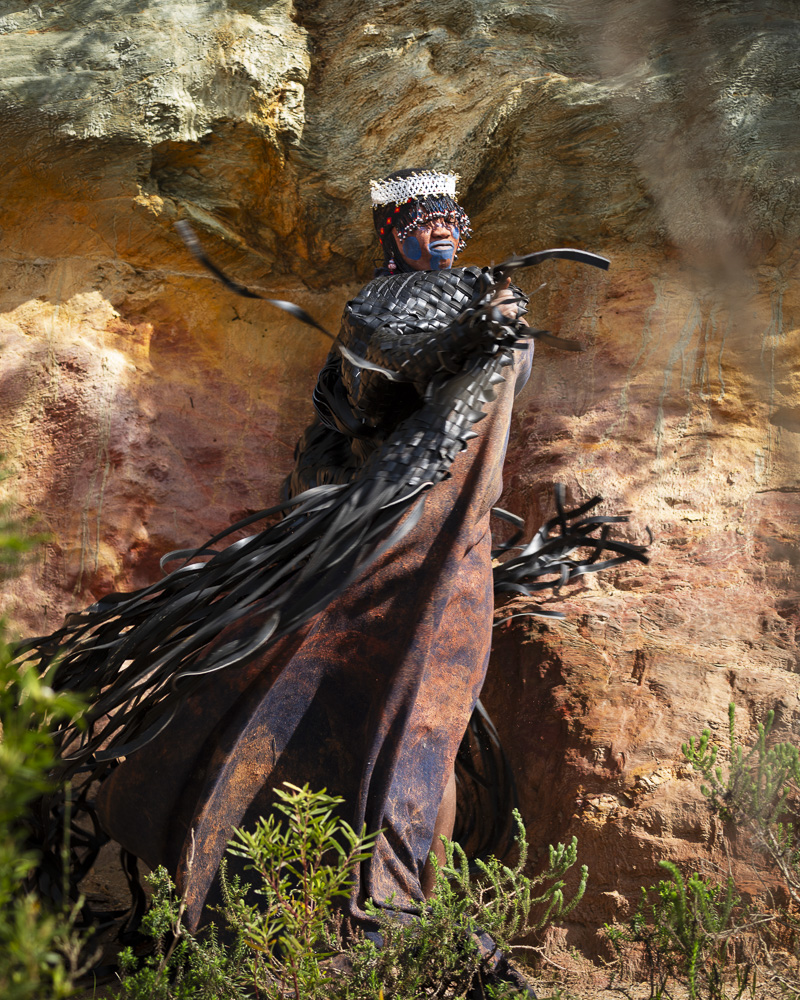
My artwork reflects on my concept of Mo’nna, meaning ‘man’ or ‘myself’. In my art process, I was focusing on self-reflection, spiritual renewal, cleansing and self-improvement.
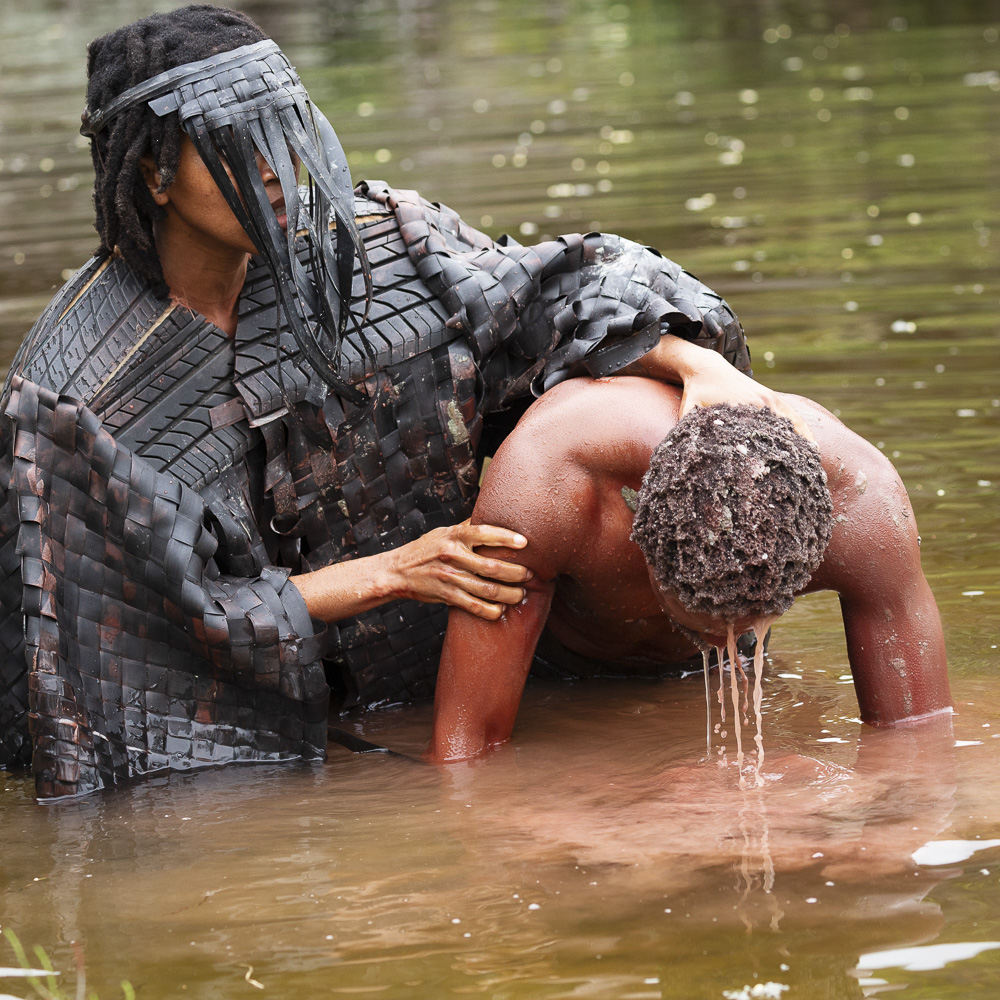
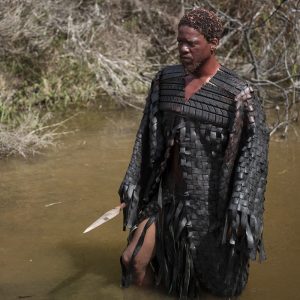
I worked with the medium of wearable sculpture made of tyres and rubber, with real-time performance art and with photography/videography. The wearable sculpture in my art process resembles and replicates the traditional attire of a graduation gown. Mo’nna means for me that I reflect on myself as an achieved academic through hard work, dedication and understanding the world around me.
The connection with nature and the environment through these diverse practices, materials and themes elevated my emotional healing. The water in the environment represented spiritual cleansing and the woman figure in the performance embodies nurturing and purification. The singing during the performance with the echo of the natural environment gave healing and showed interaction with the surrounding landscape.
Ivukuvuku
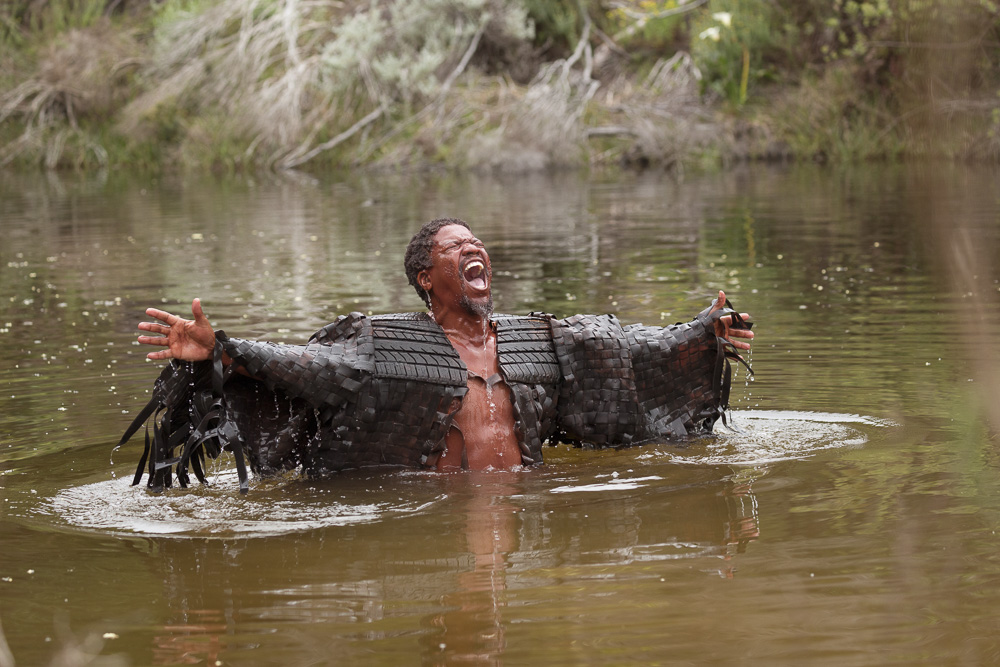
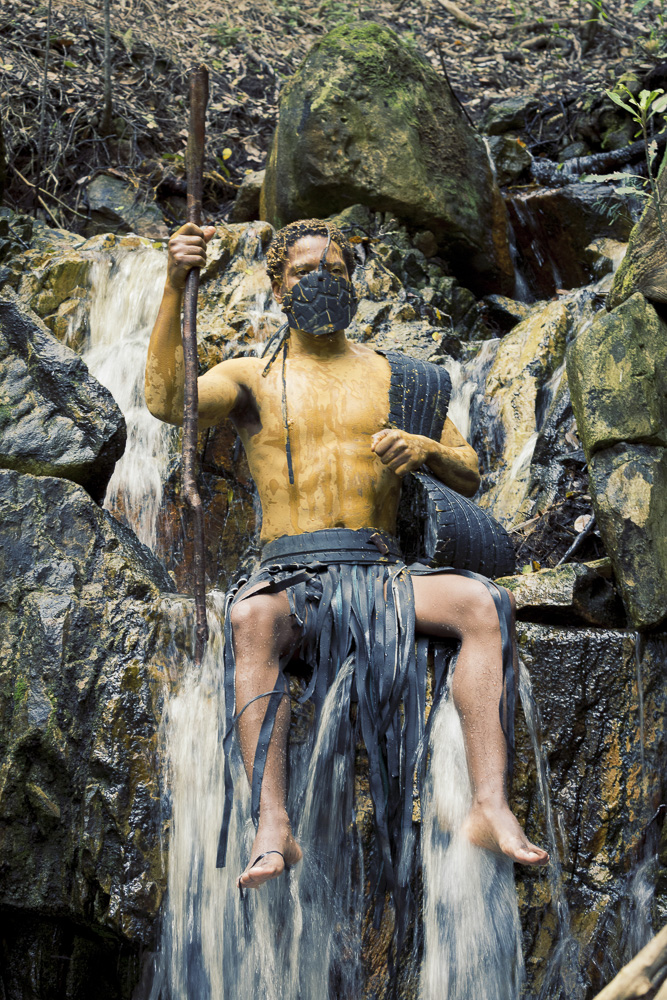
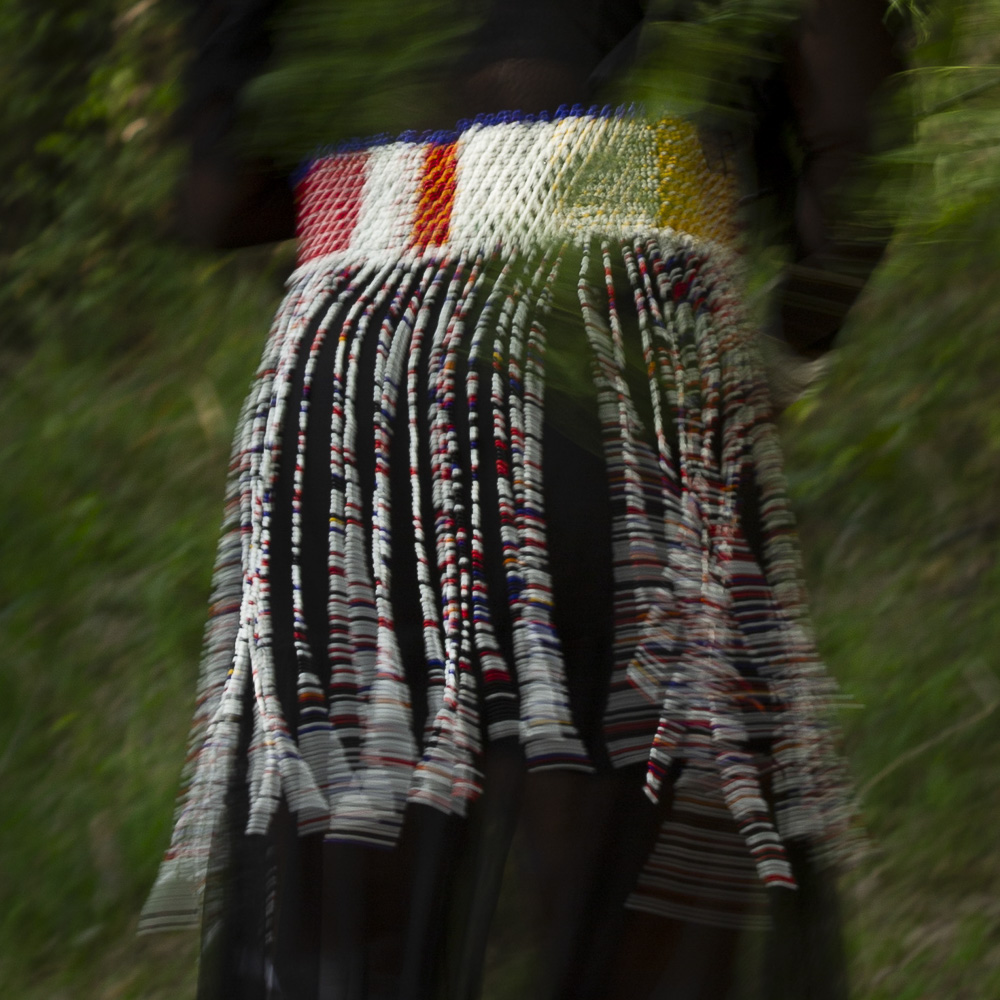
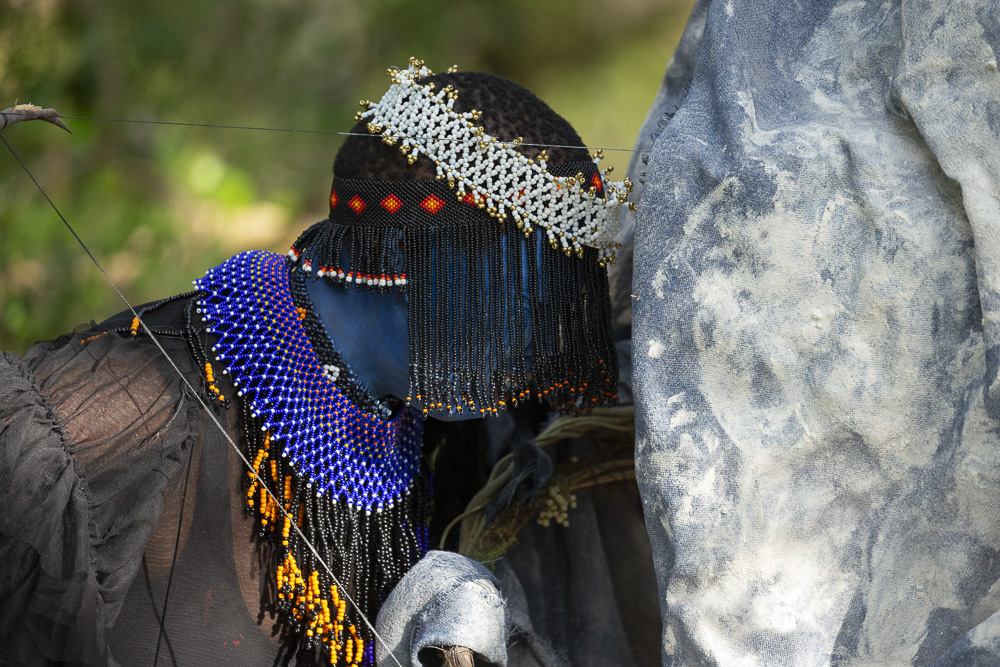
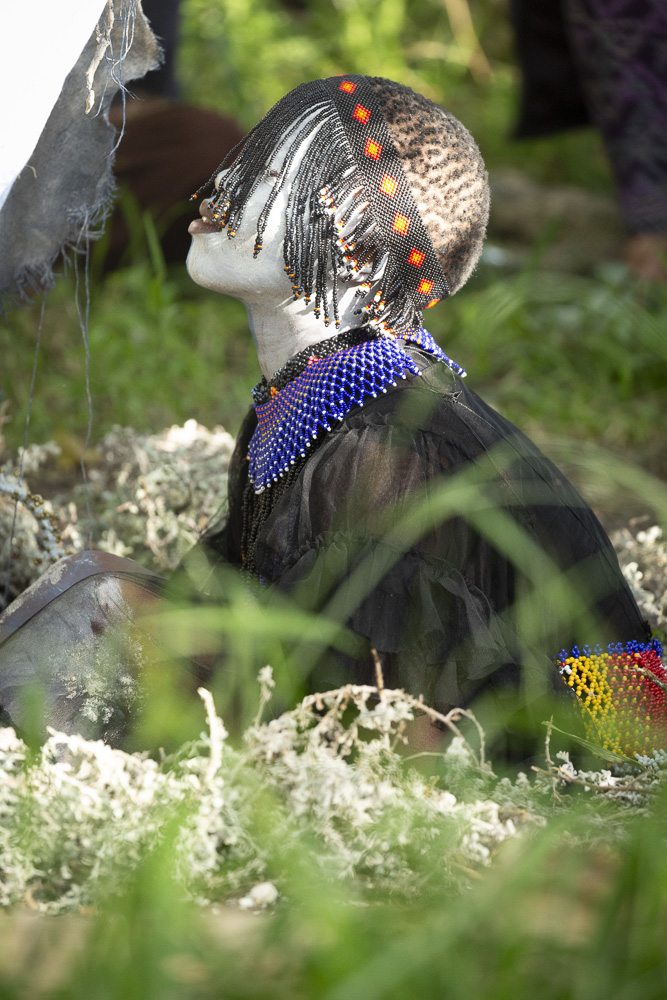
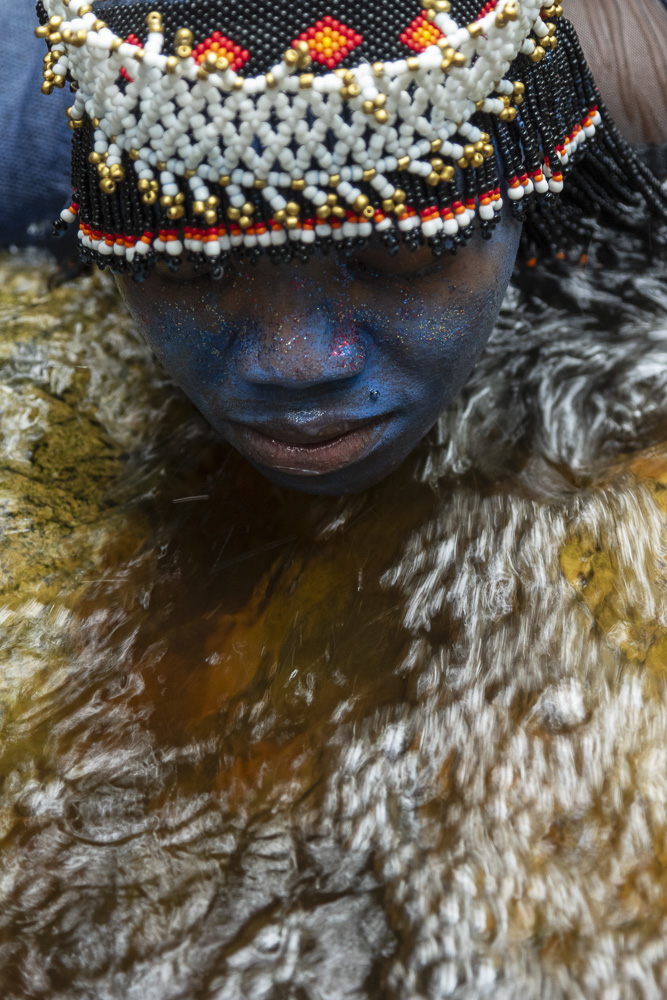
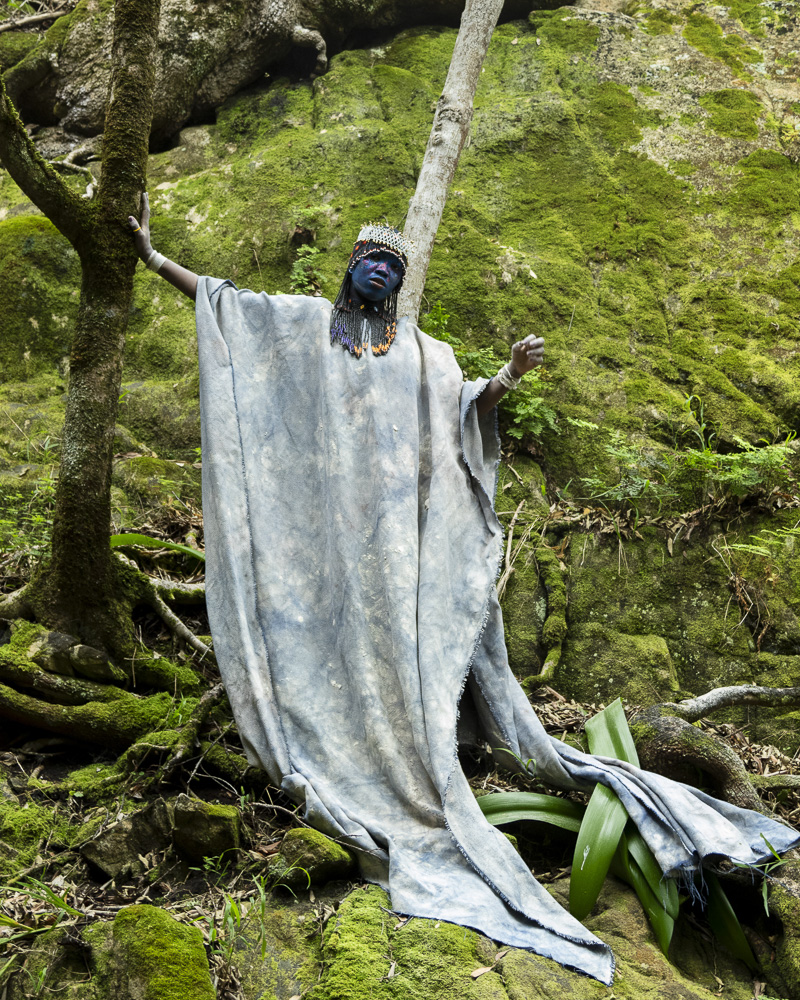
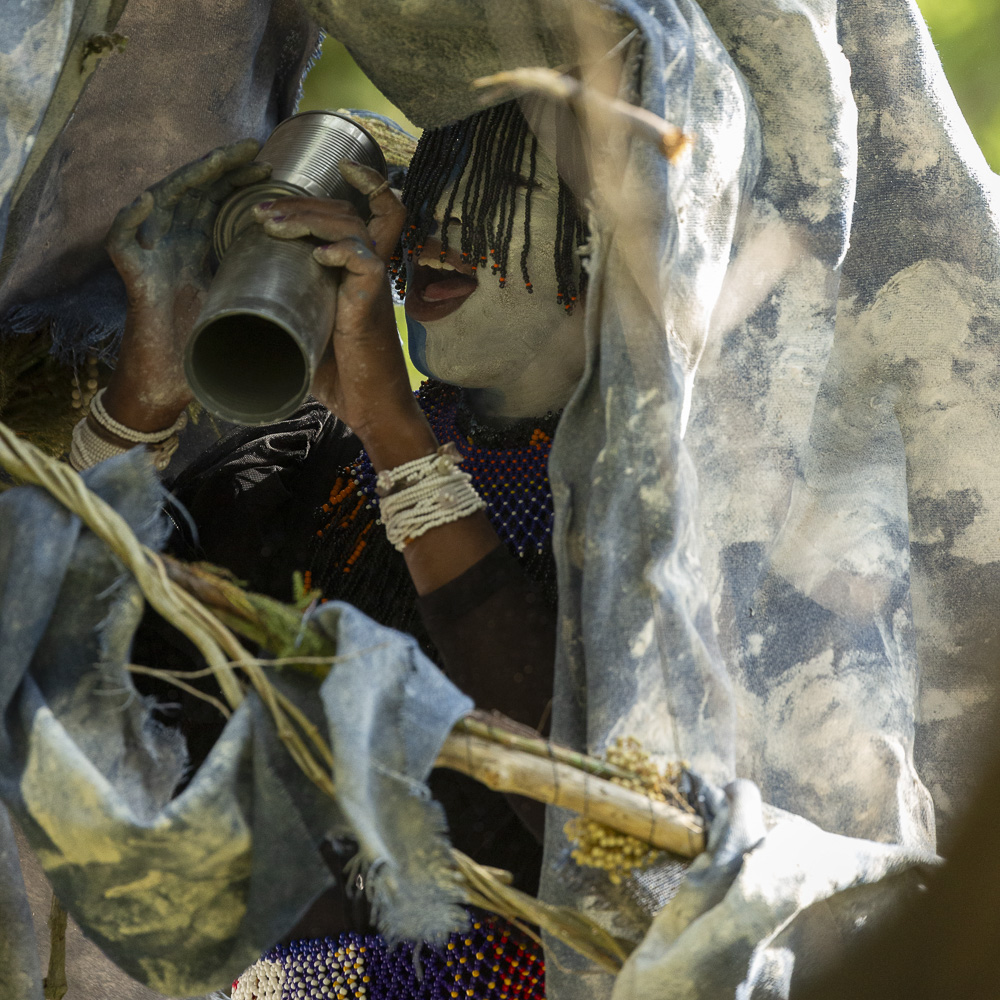
In my artistic research processes, sackcloth emerges as a potent symbol of ancestral traditions and sustenance – a sign of respect, reverence, and spiritual connection, aiming to seek and delve deeper into multi-layered sensory experiences while focusing on narrating themes of memory, healing, resilience, identity and home.
My research creatively encompasses an emotive and immersive site-responsive installation using indigenous organic mediums such as earth, stones, impepho, sea-shells, clay and a performance to reflect on natures impact on body as sight of memory.
The process itself is an embodied performative expression, a way of approaching reflected relationships between the material, objects, body and stories evoked through memory.
Erin Grice
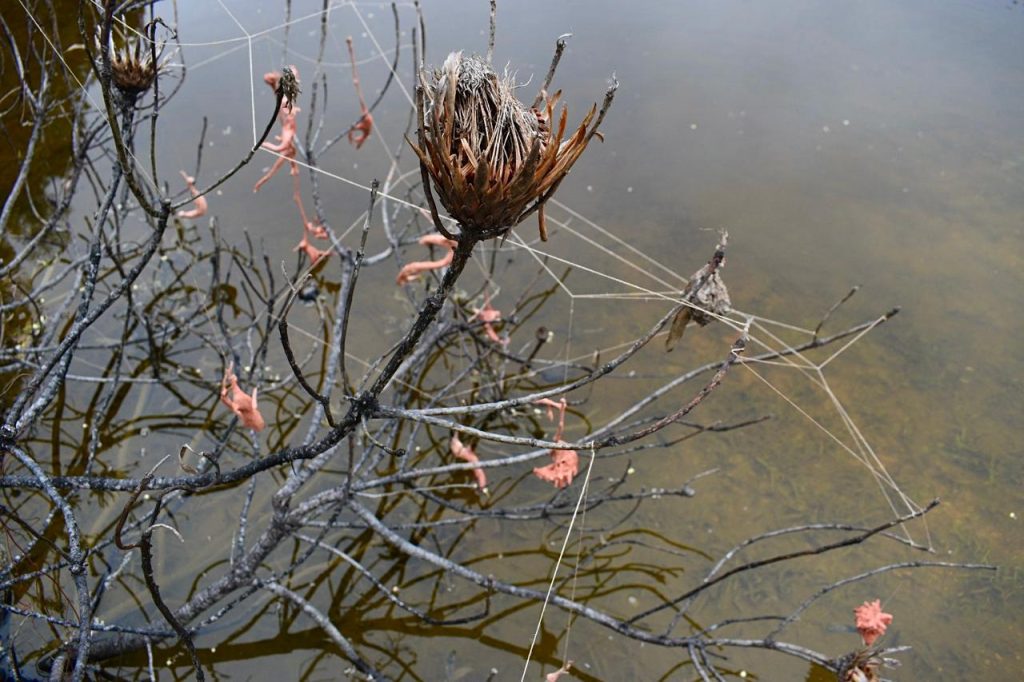
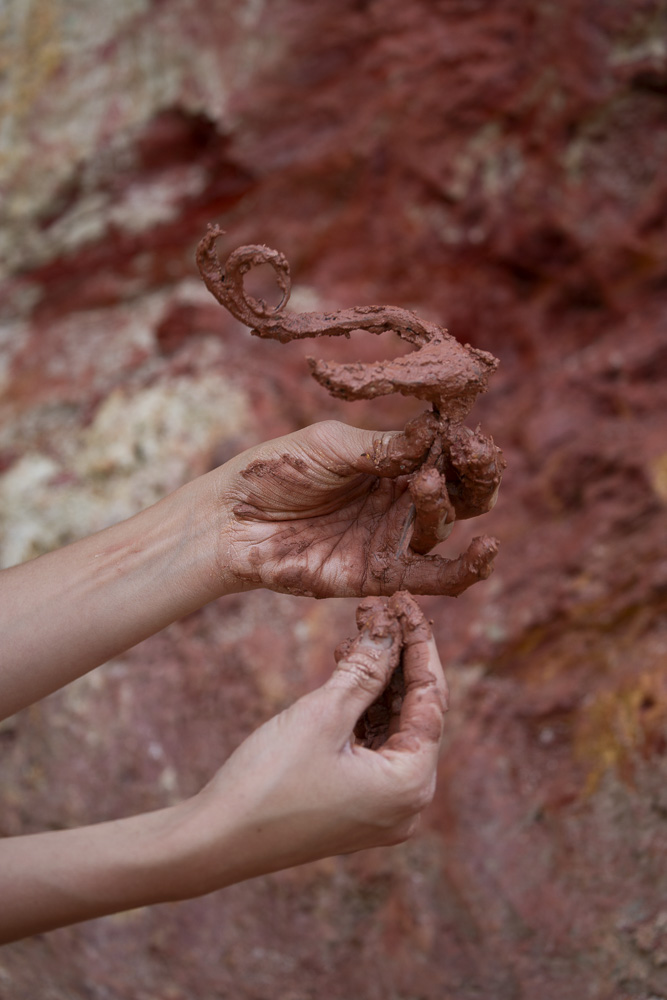
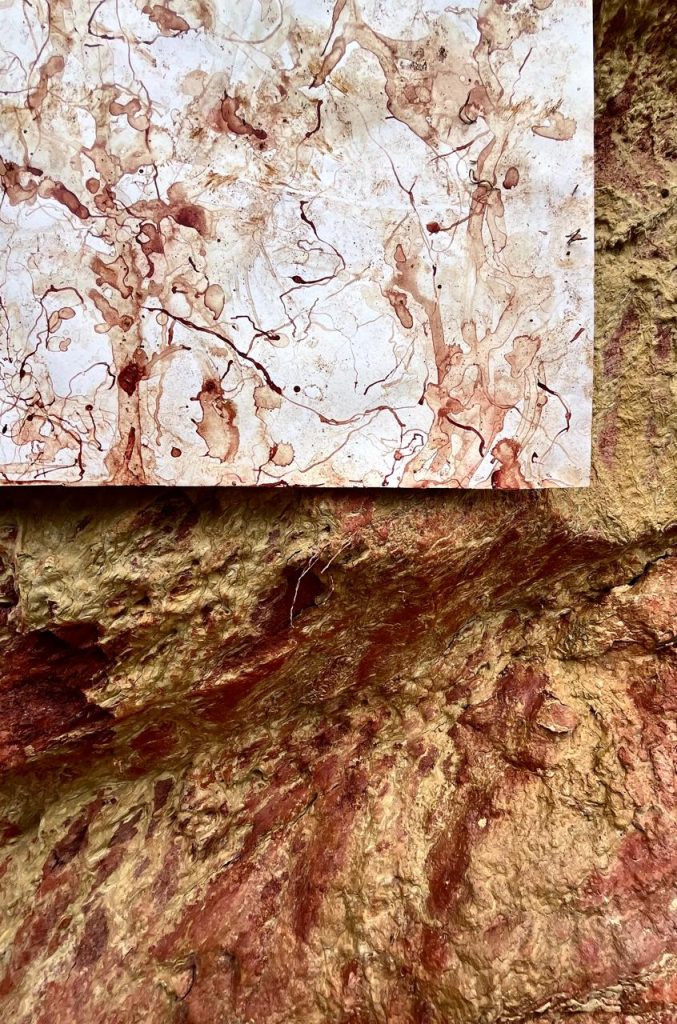
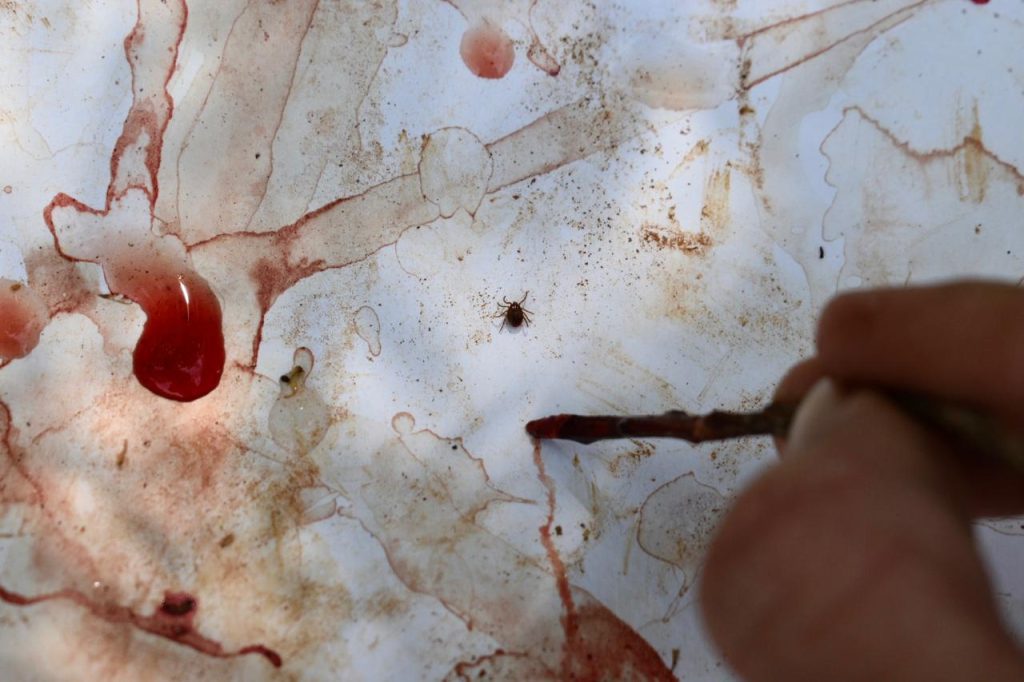
The vibrant ecosystem of Bodhi Khaya provided me the space to explore healing my blood ties to the land and allowed me to (re)connect with the earth in more-than-human ways.
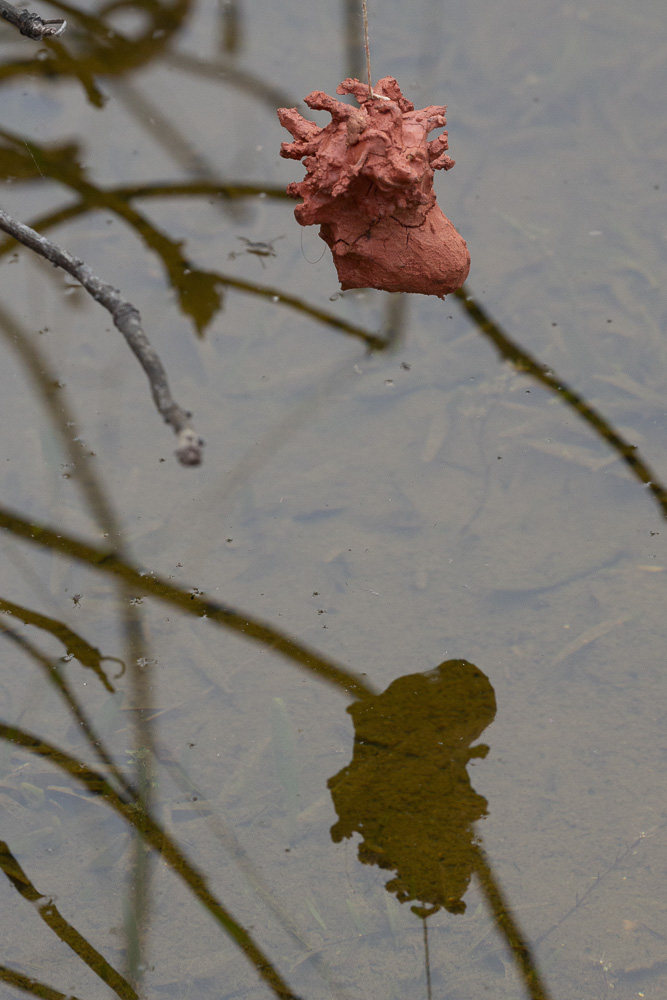
I found the clay deposits and my body to be sites of pigment making, that would trace the movements of various beings around me. Blood (and clay) become a site to hold life, to hold memory within space, and to imagine ways of actively engaging with the earth.
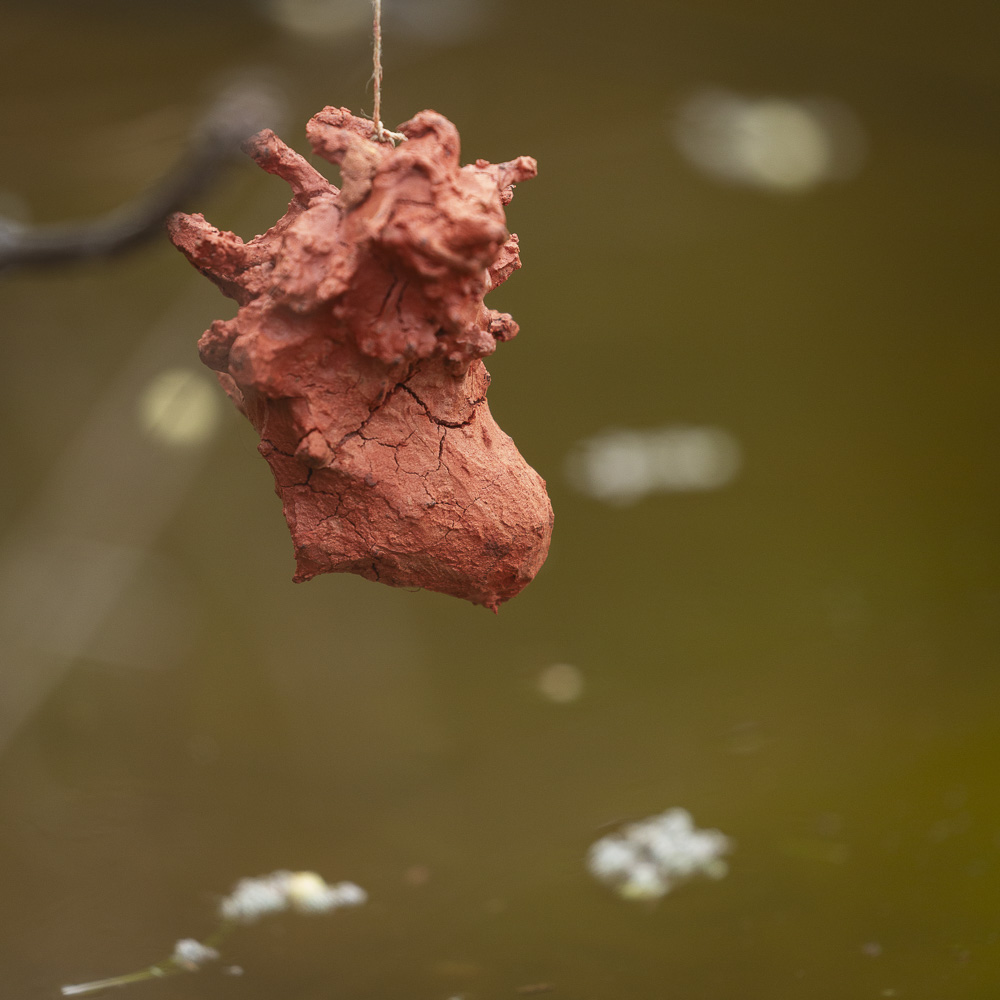
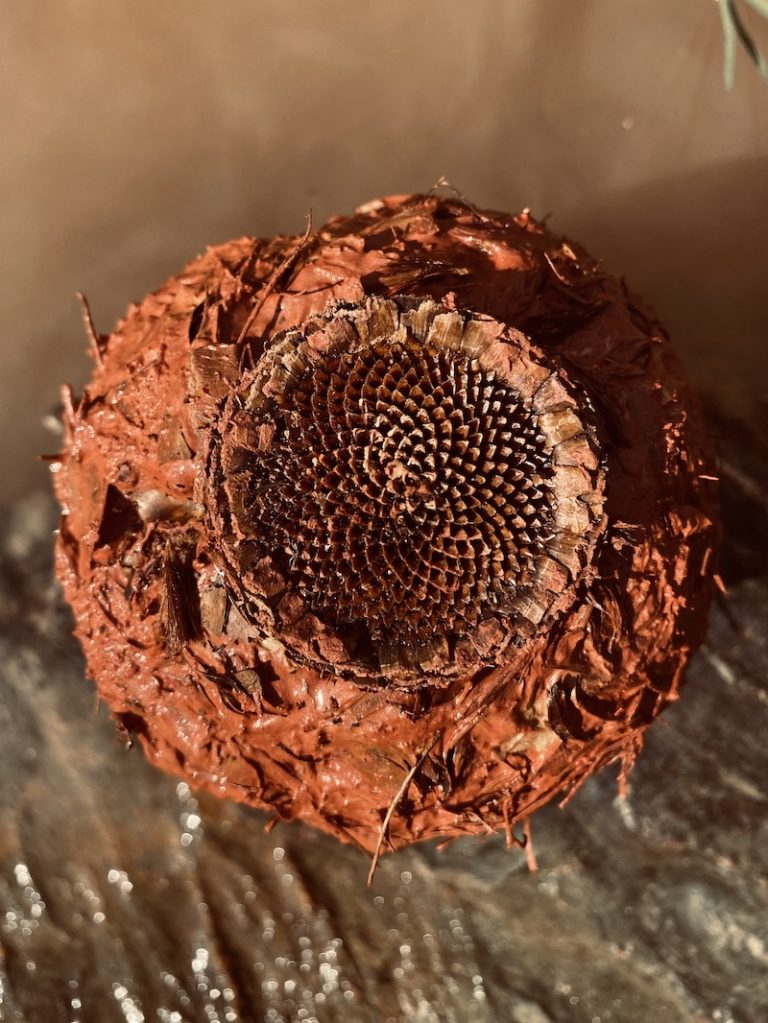
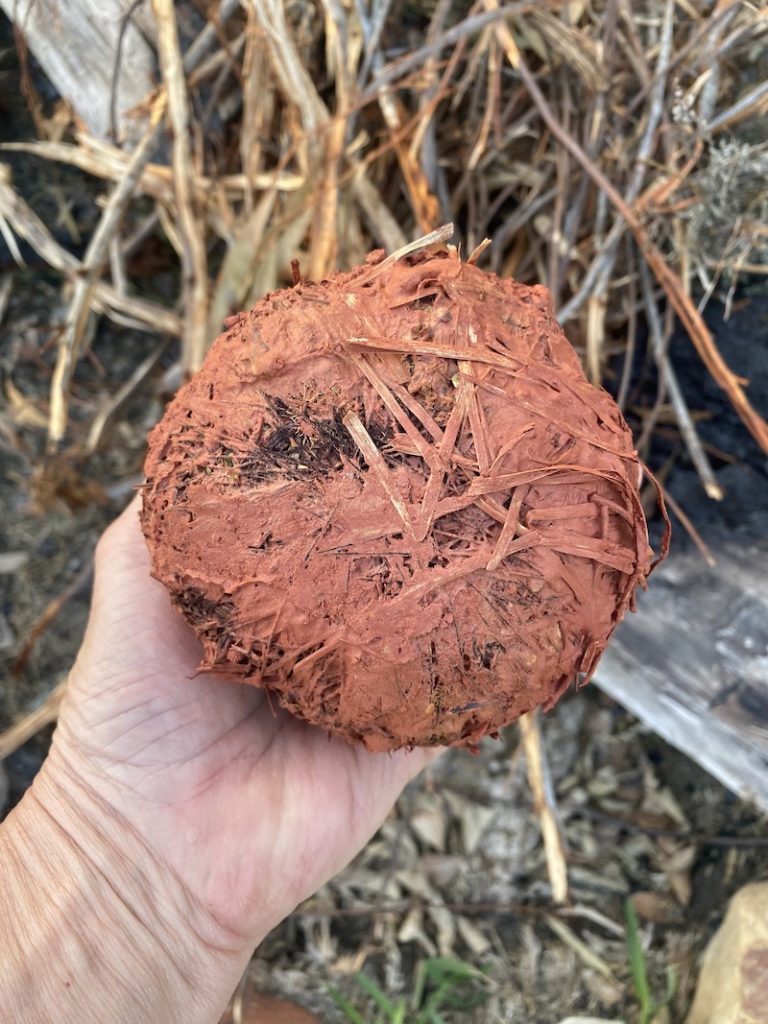
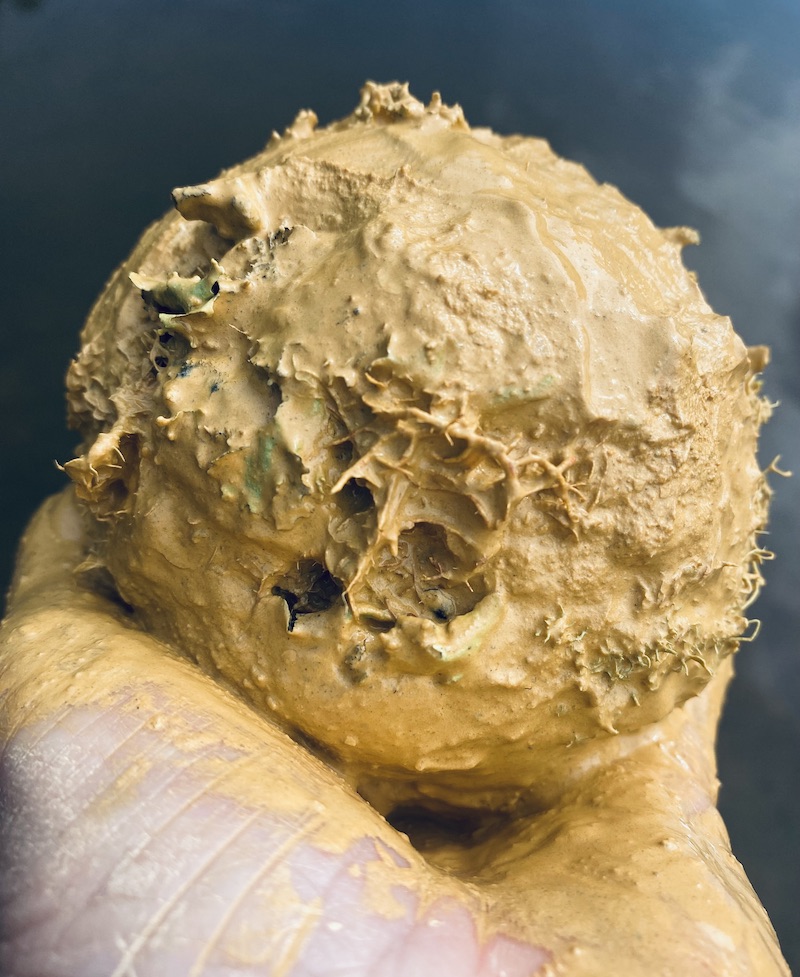
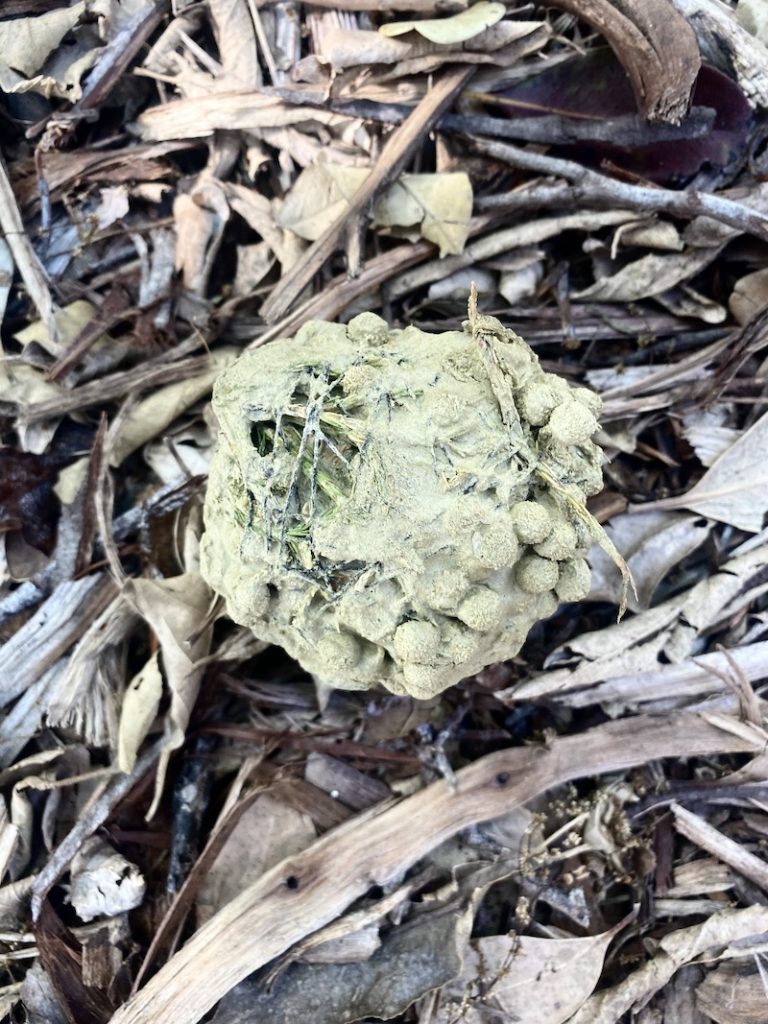
I explored ways of encasing the convoluted galls from the invasive trees in clay, and they took on a new narrative, making home and sustaining life without perpetuating colonial legacies.
Waste, whether from my body, the trees, or the ecosystem through instances of death, become a space for rebirth and renewal as I imagine new forms and ways of being with(in) the world, as the earth.
How do we remember spaces?
How do we make space?
How can we hold the life around us so that we may hold the life within?
Heidi Hirsch
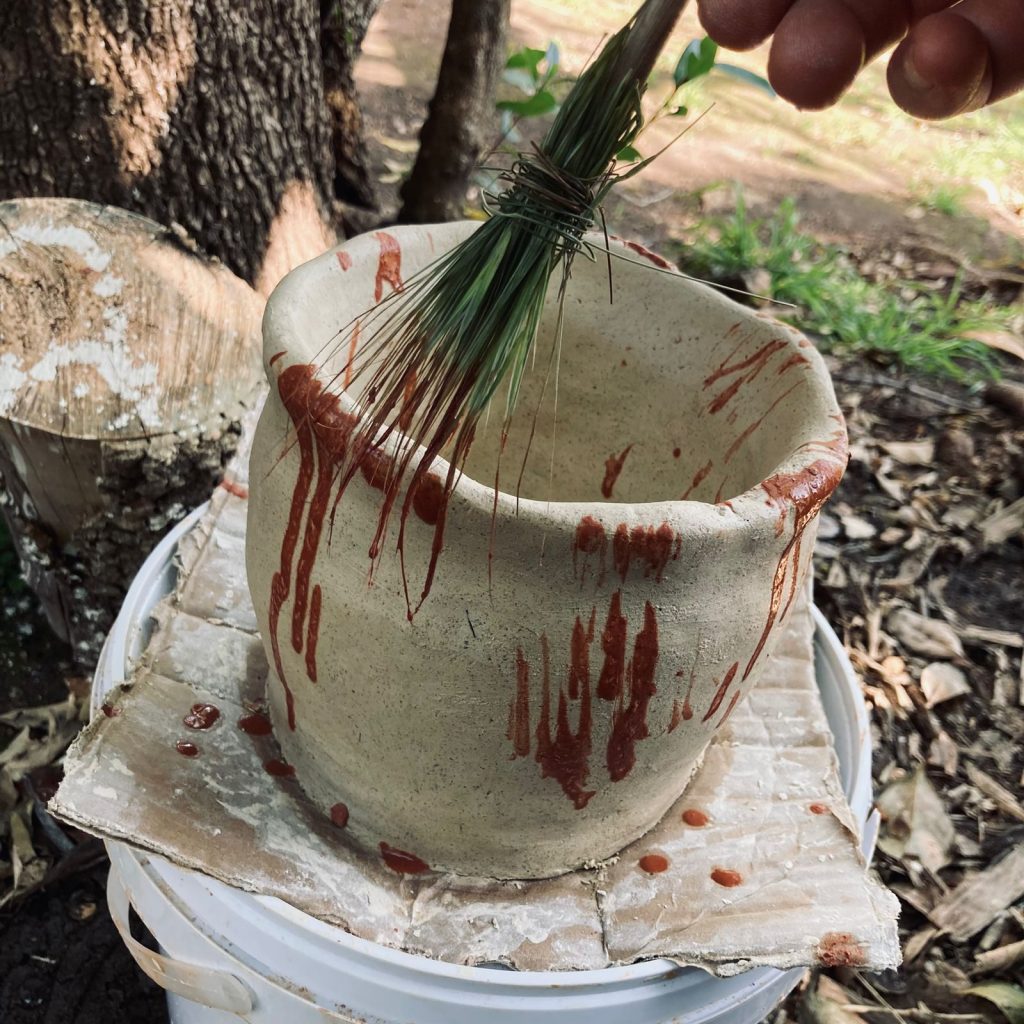
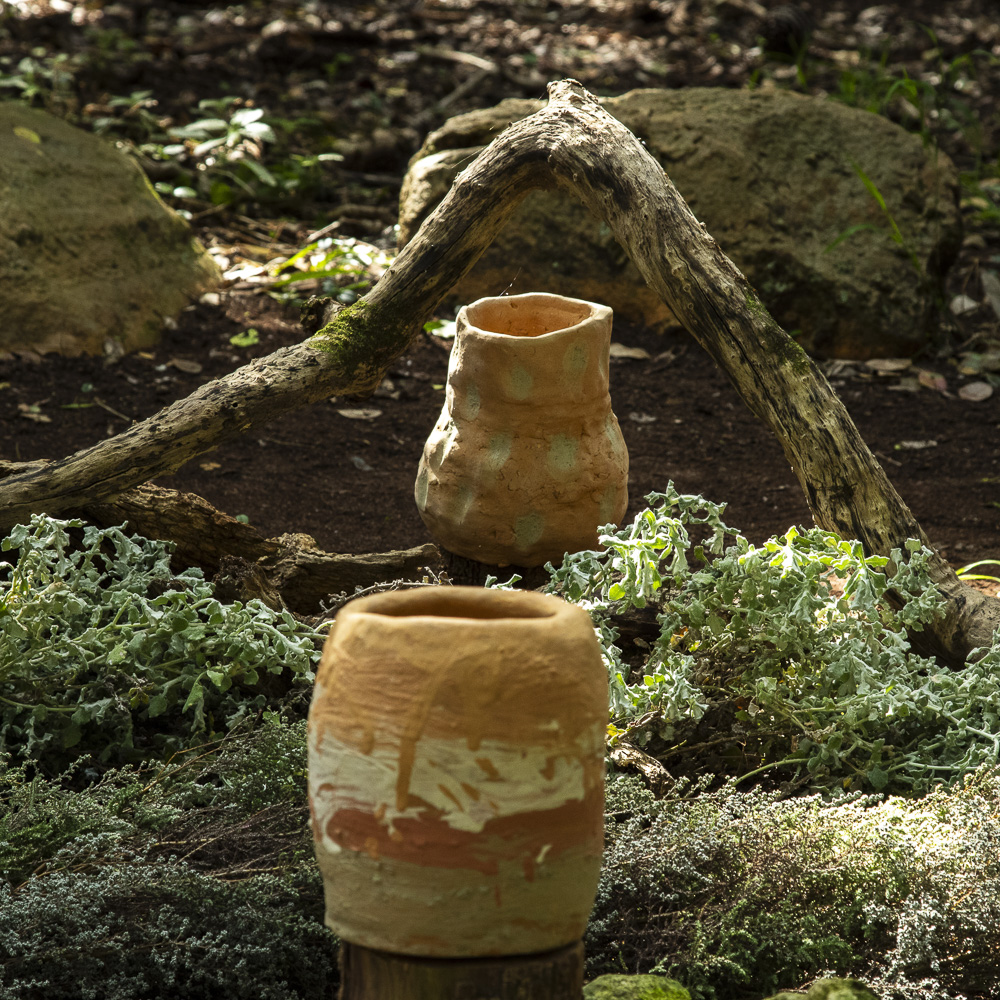
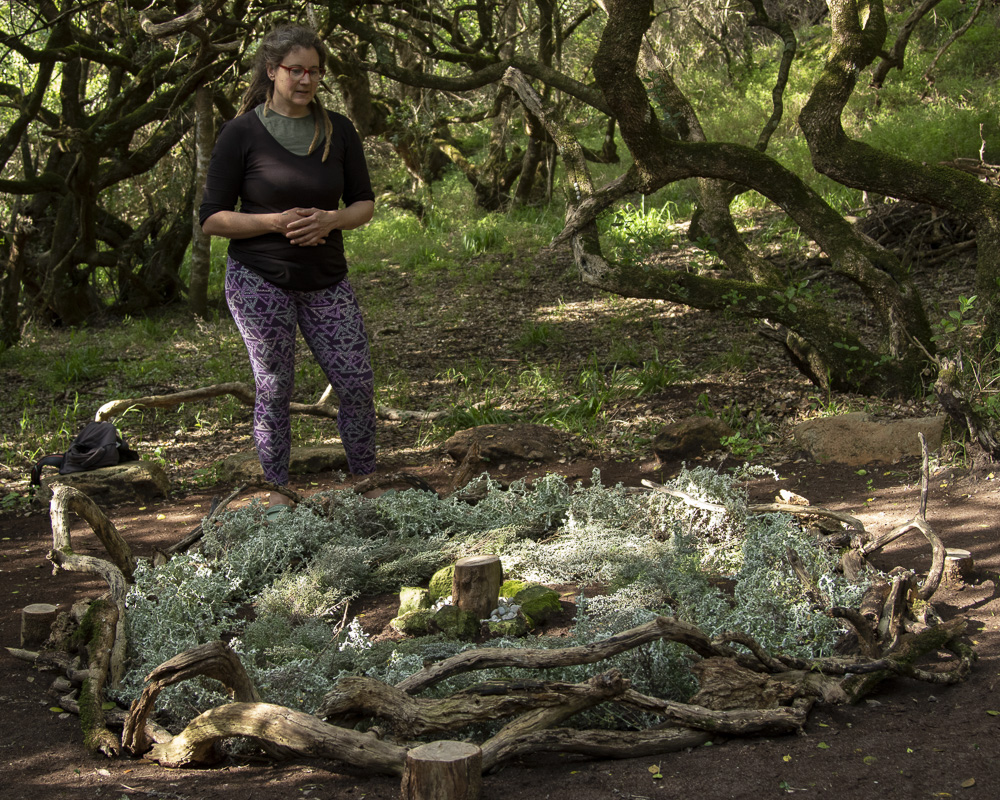
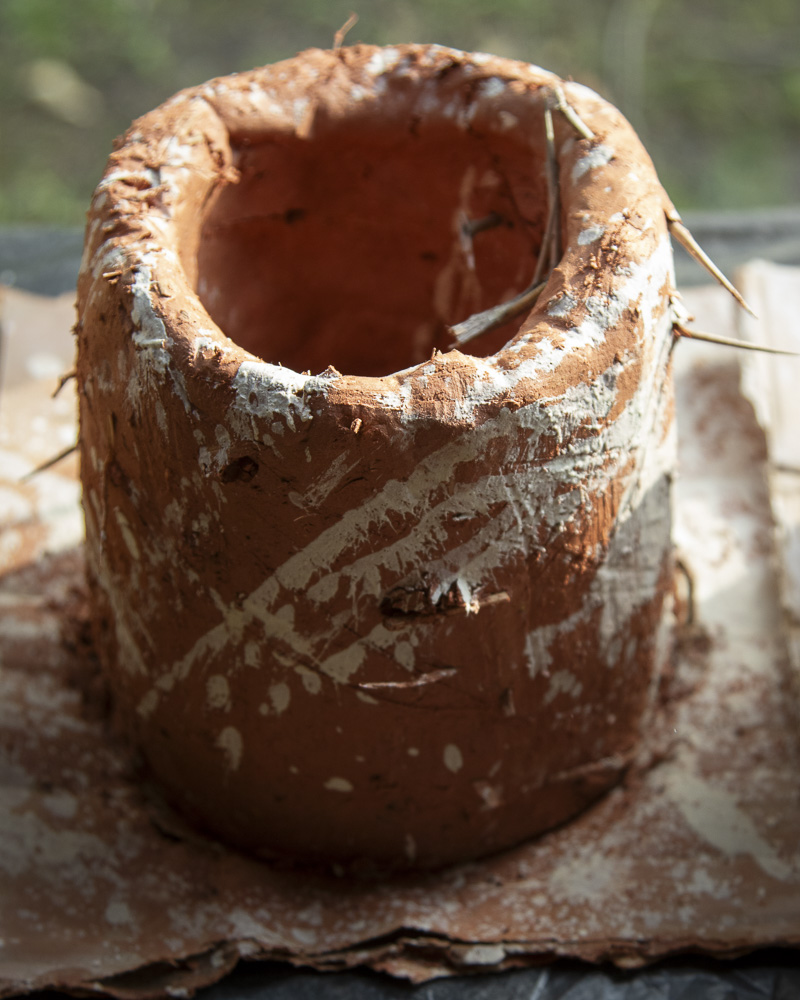
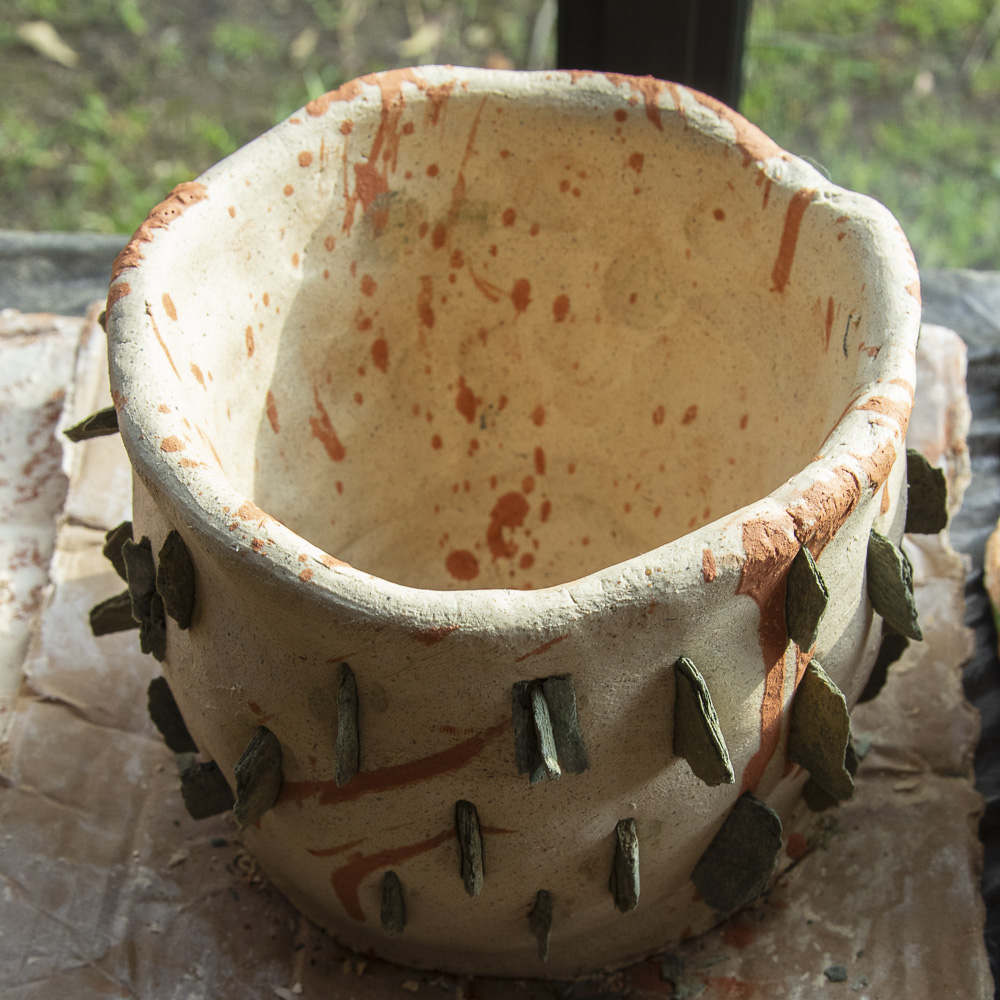
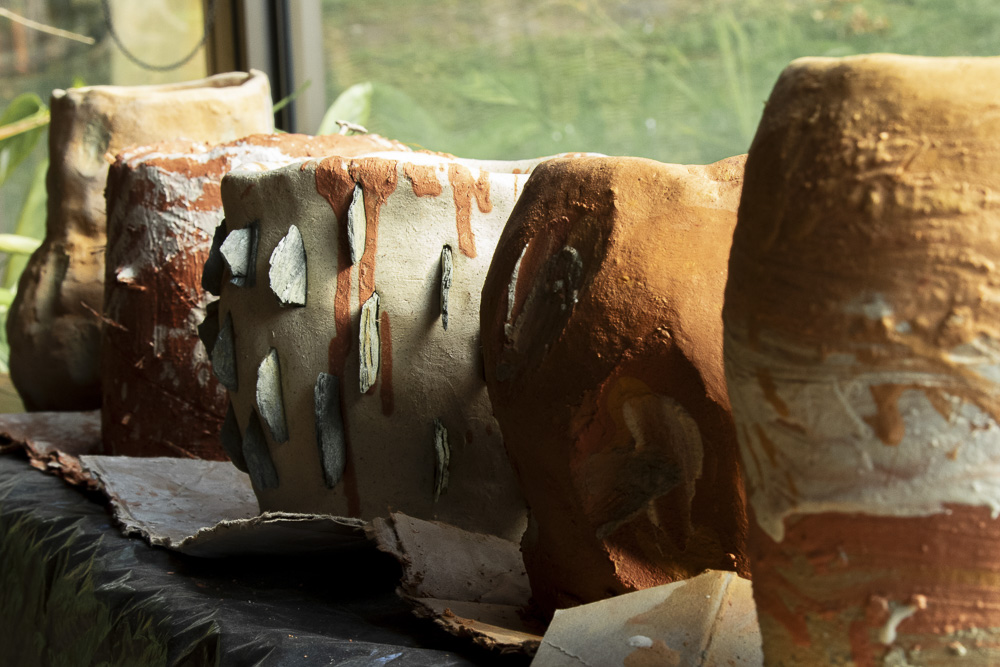
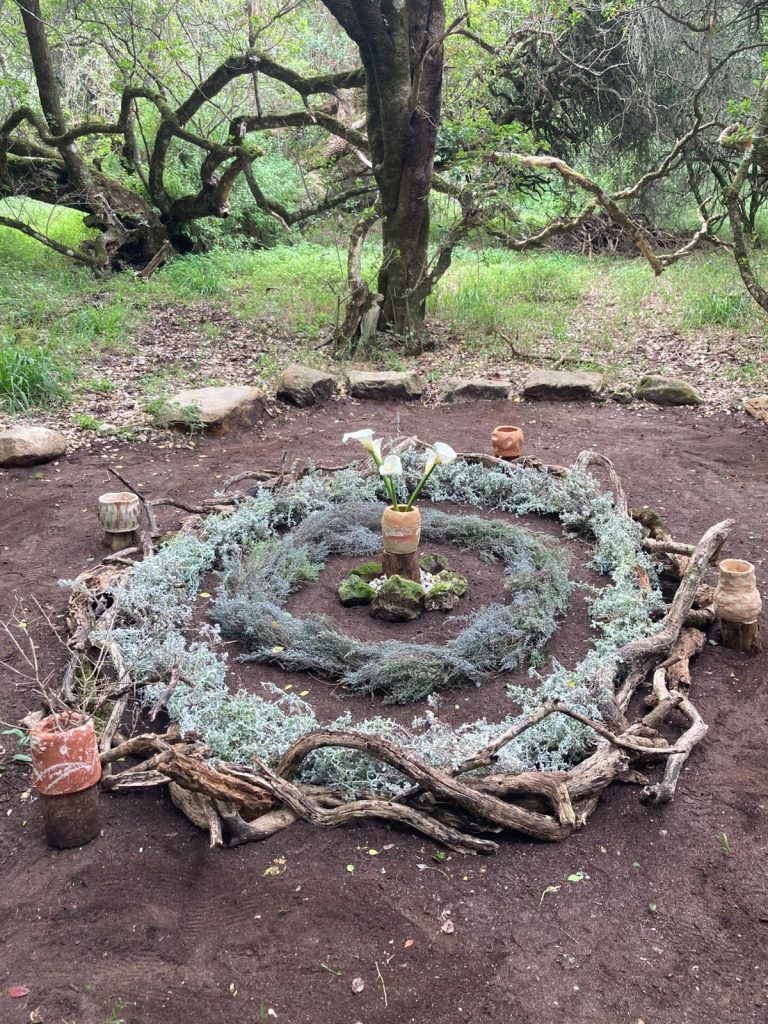
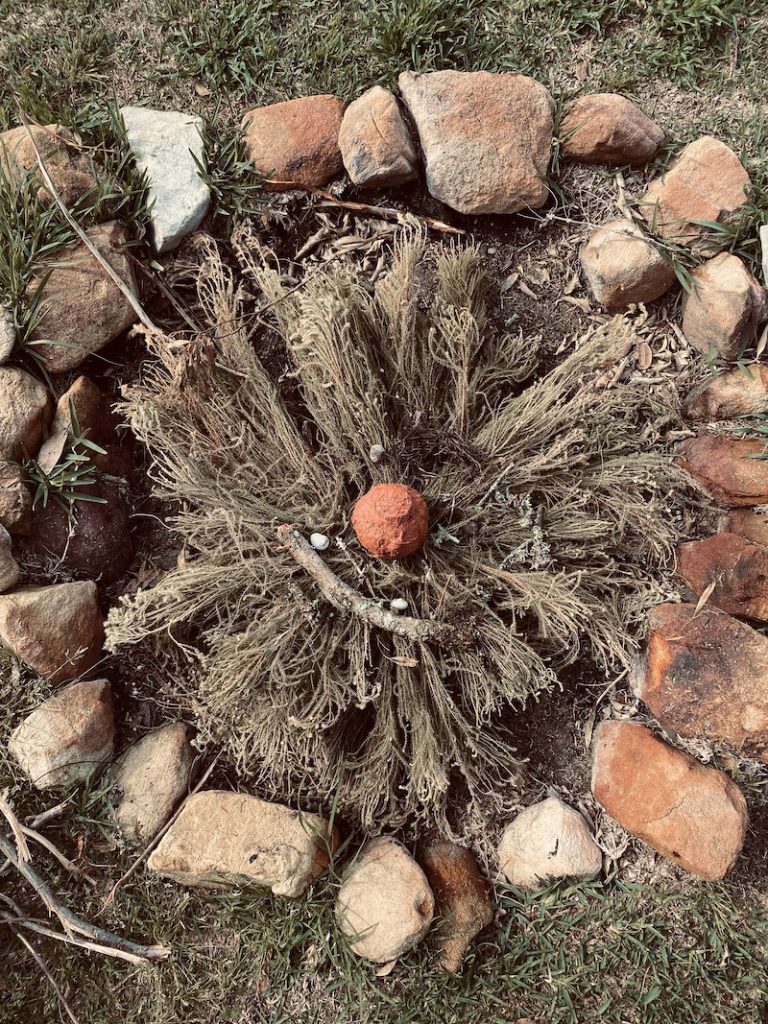
‘Solastalgia’ is a land art installation that embodies the profound sense of ecological grief, expressed through five clay vessels crafted from locally harvested wild clay. Each vessel represents a stage of grief—denial, anger, depression, bargaining, and acceptance. The vessels are placed within a circular arrangement of natural materials found on the surrounding land, symbolizing the cyclical and non-linear nature of grief. ‘Solastalgia’ invites viewers to reflect on our interconnectedness with nature and the emotional responses elicited by the stark reality of ecological loss and transformation. Through this installation, I aim to create a space for contemplation, healing, and a deeper understanding of our relationship with the natural world.
Farzaneh Najafi, Iran
Creating art in new spaces always enhances my creativity and my connection with nature, and the exquisite nature at Bodhi Khaya offered me a unique and unforgettable experience.
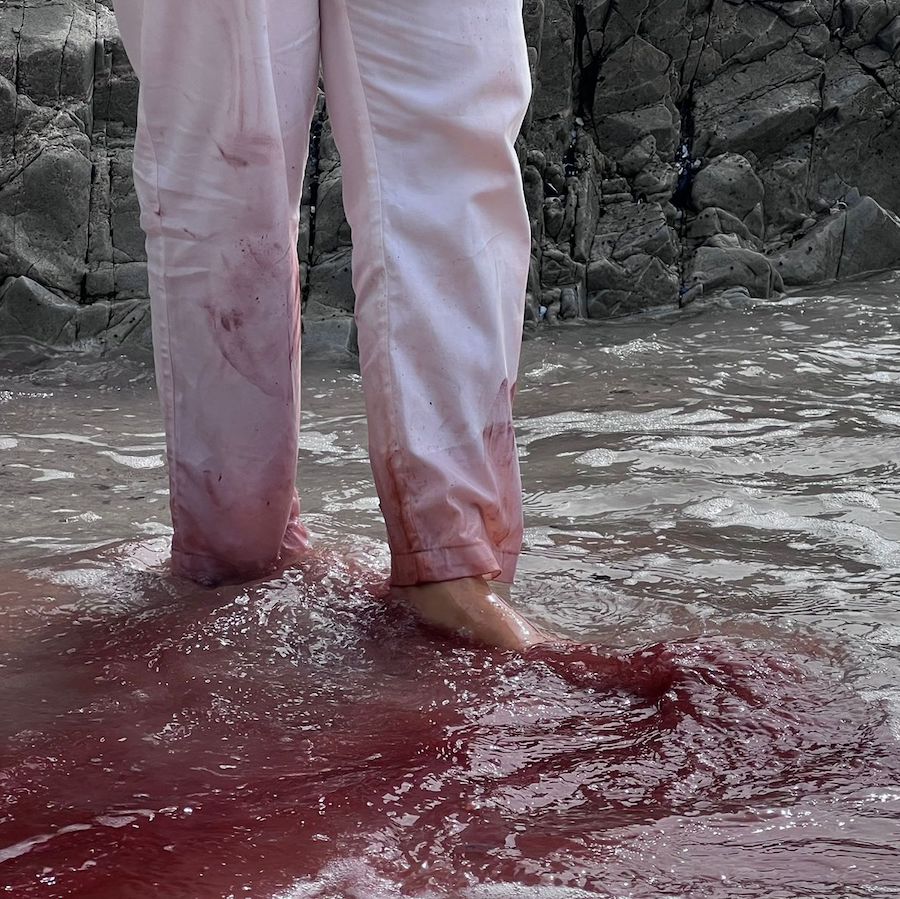
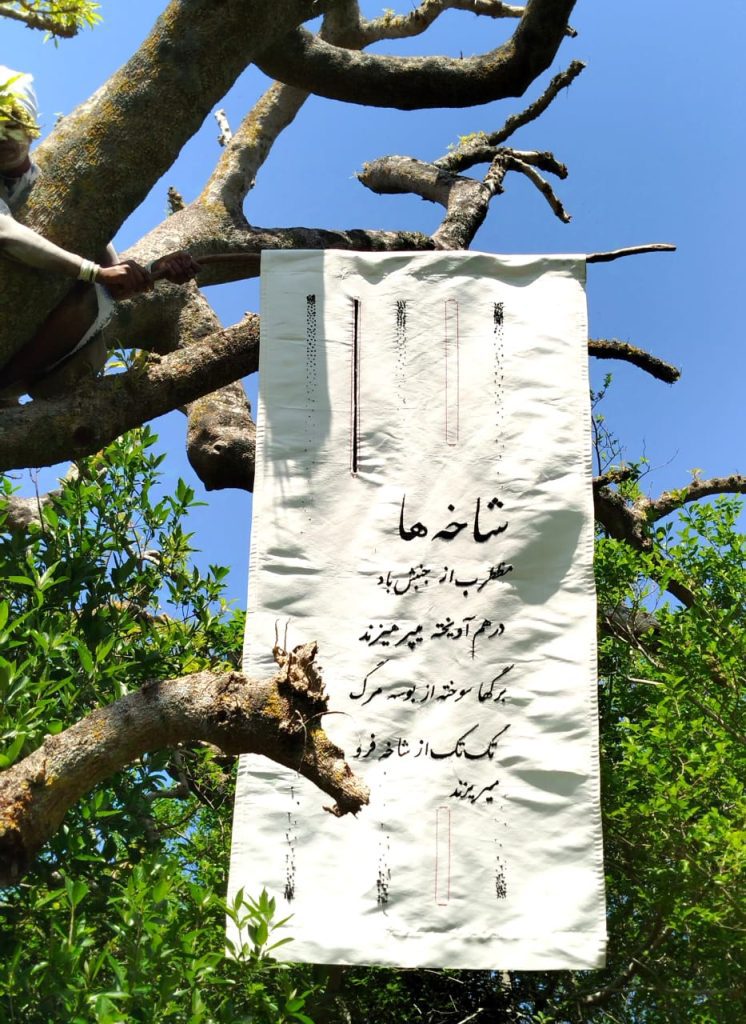
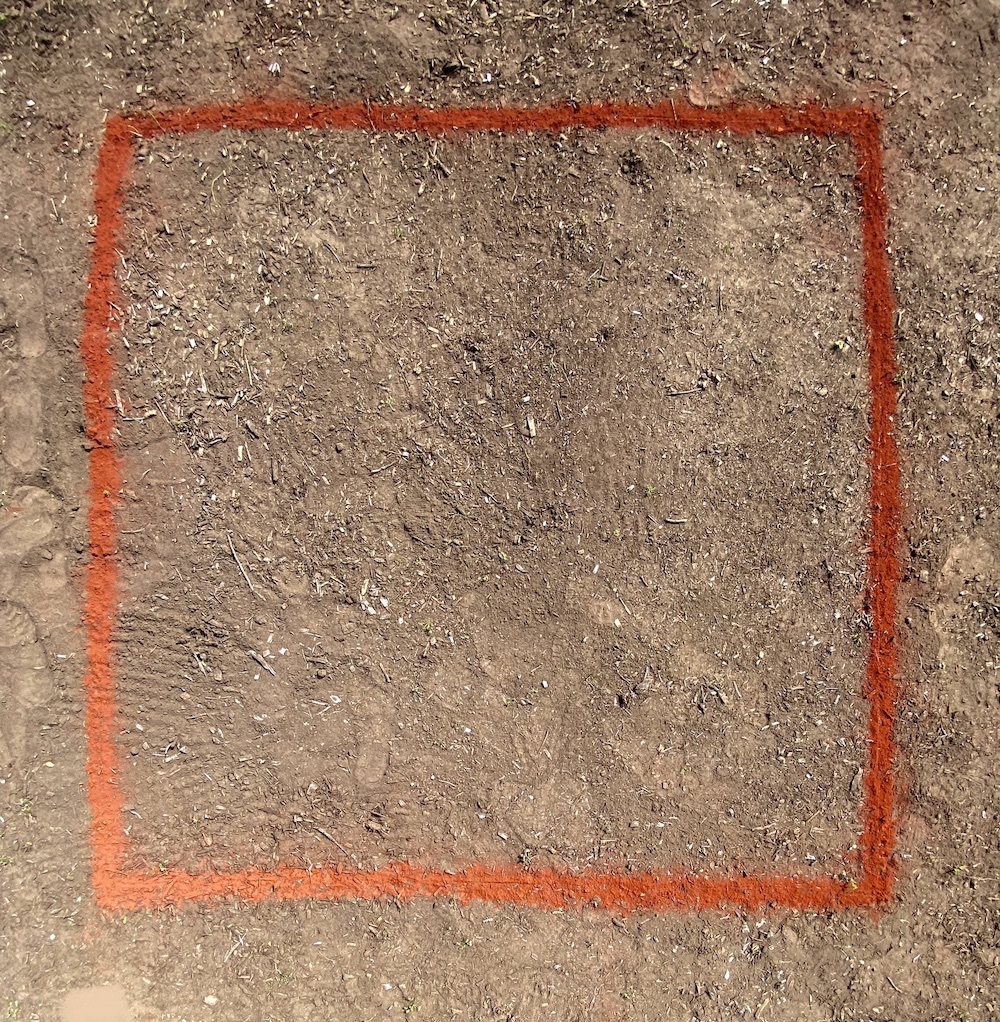
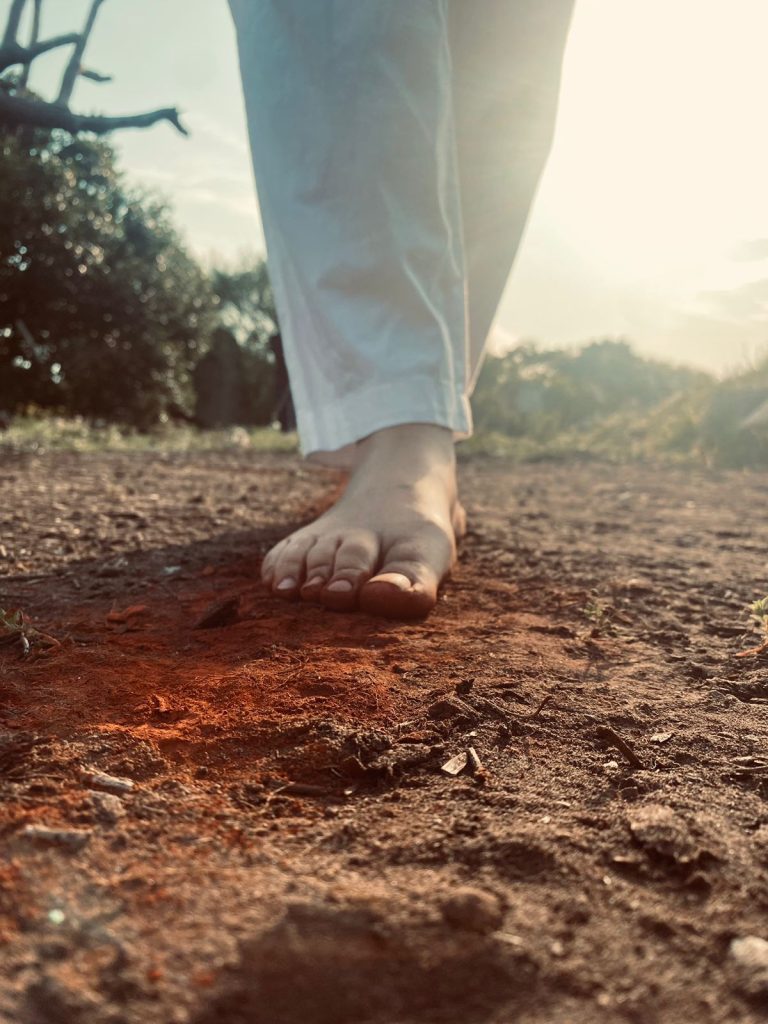
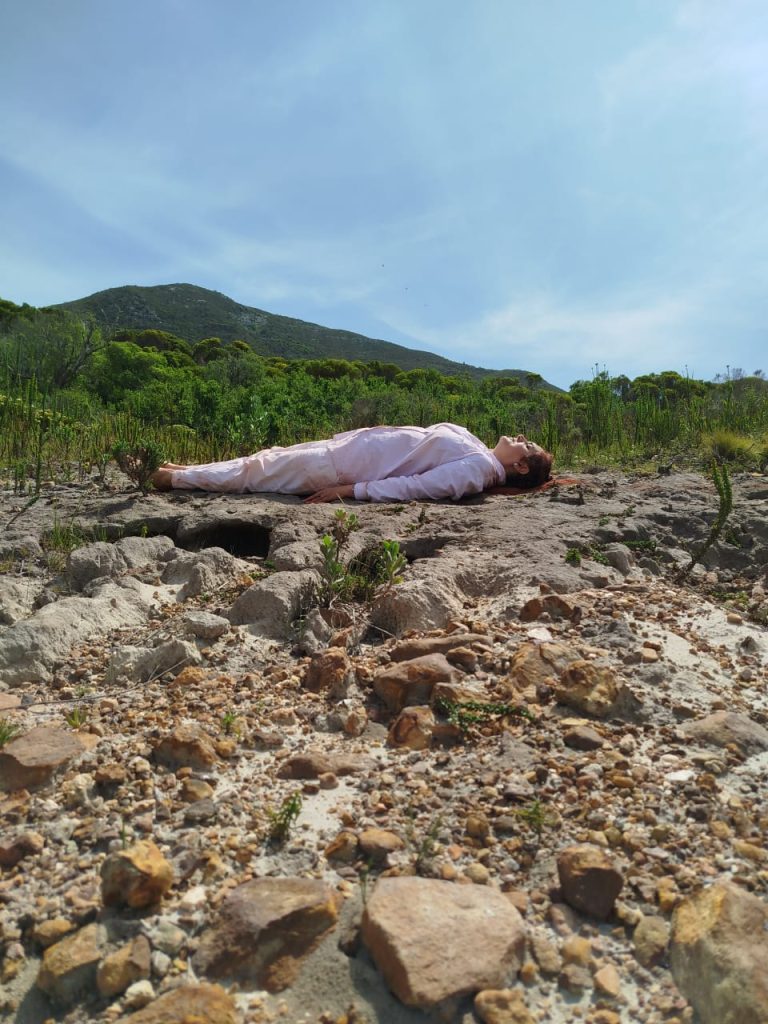
In my performance “Fighting Fear” which took place over six days at four different sites, I found myself directly confronting an overwhelming fear each day: my fear of snakes.
I originally wanted to confront one of my biggest fears—the fear of confined and narrow spaces. However, the snakes I encountered presented an even greater fear, one that had deep roots in my subconscious. I believe that by observing a snake quite close during the second day of the performance and by witnessing their presence daily, my fear of snakes has largely been eradicated from my unconscious mind. Light and brightness have triumphed over darkness and the devil.
However, the most beautiful and significant part of the project was the performance on the fifth day when I found myself on a small beach in front of the De Kelders Caves. Being in this marvelous place, with its indescribable beauty, I was so excited to have the opportunity to perform in one of humanity’s earliest dwellings, with the waves of the Atlantic Ocean touching my feet. The lines I had drawn on that beach with the red earth of Hormuz Island in Iran, added a symbolic and powerful element to the performance, making the experience even more profound.
Kiara Watermeyer SA, Zimbabwe
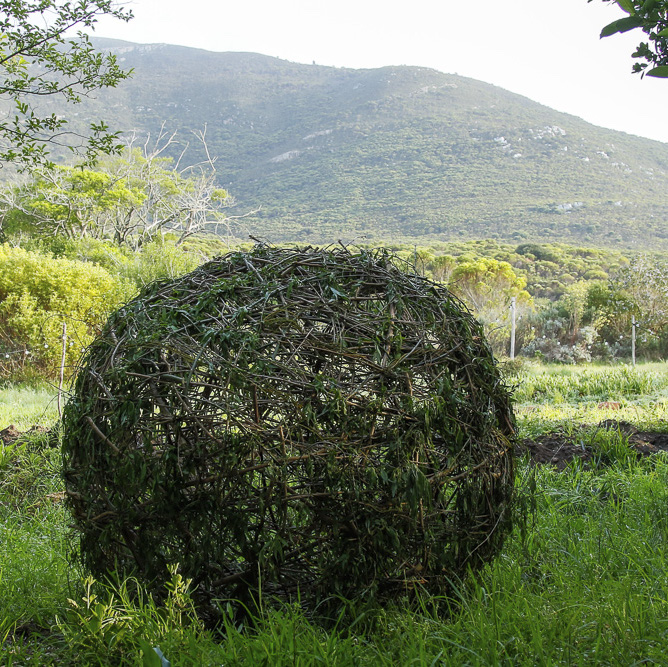
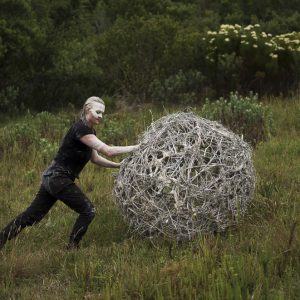
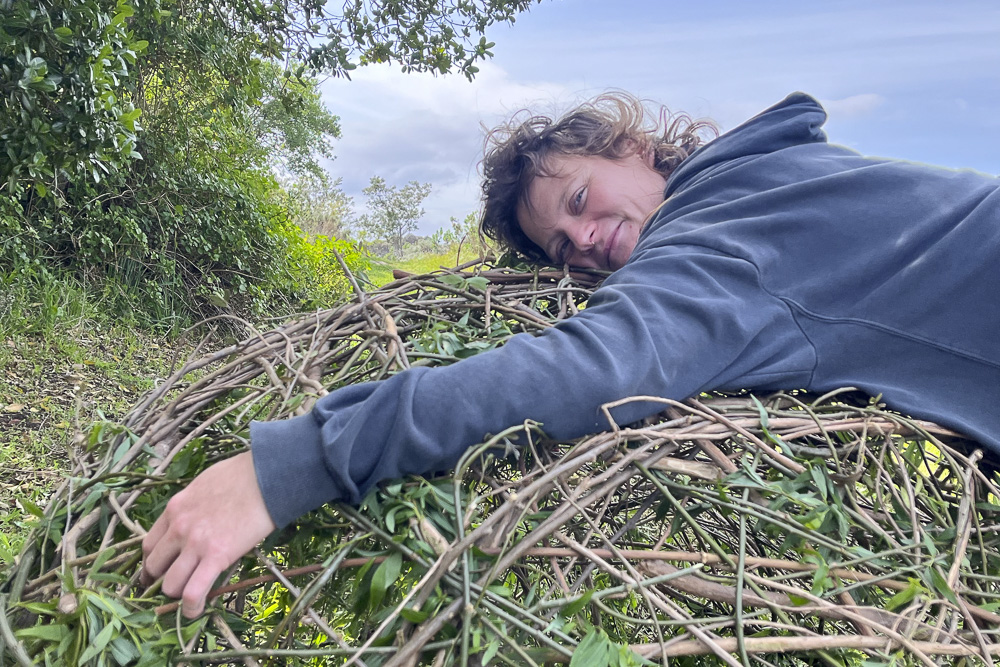
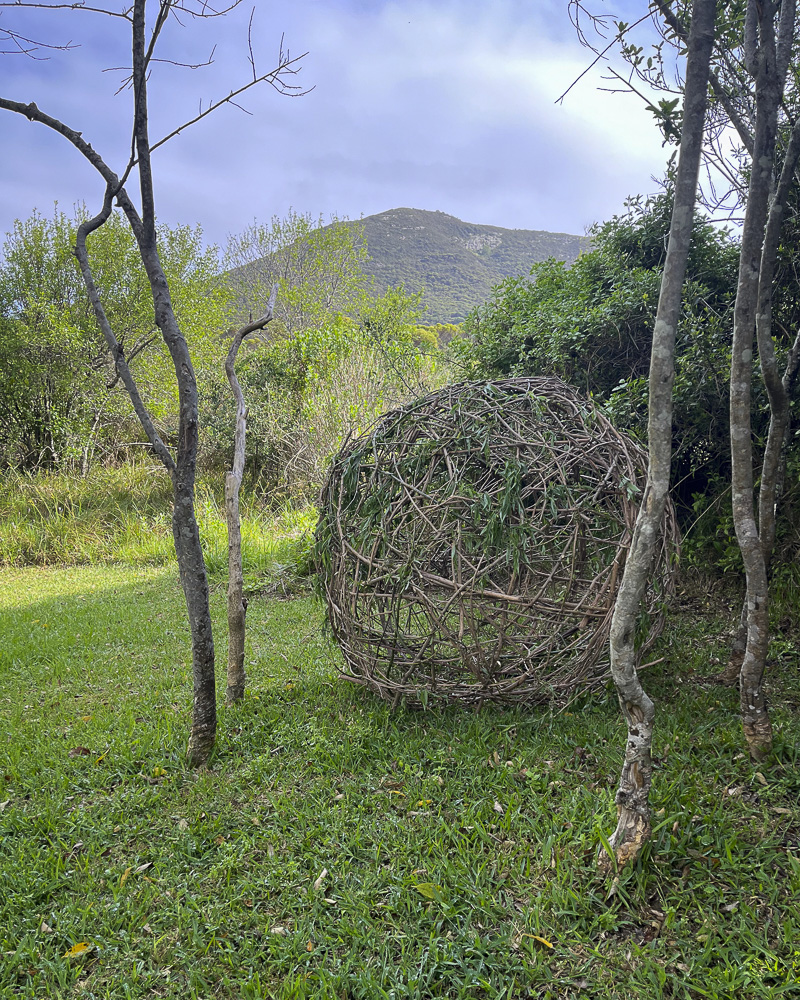
“Moving Kak”
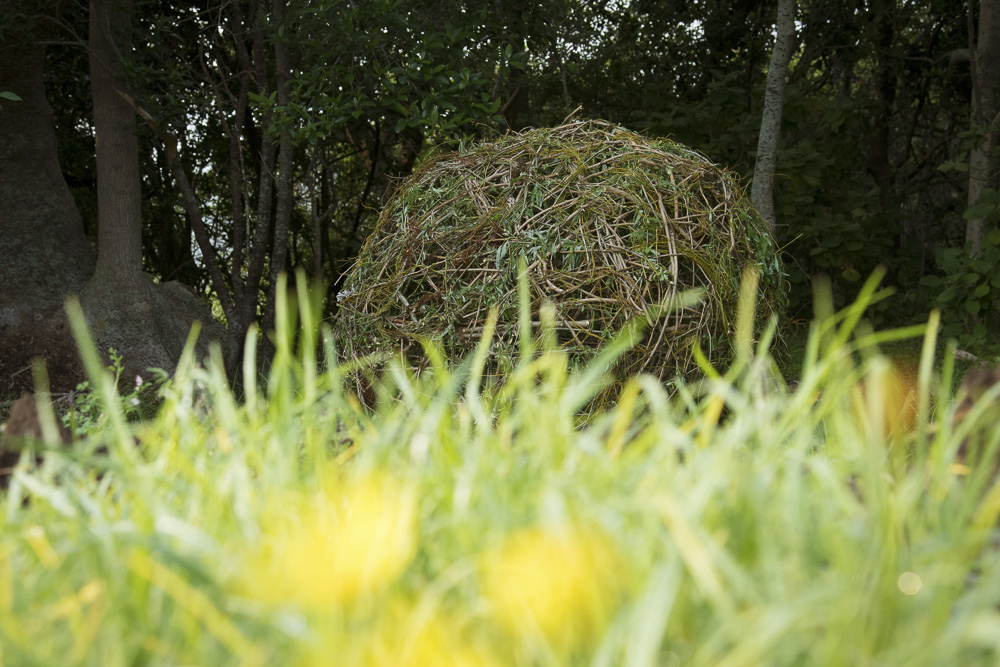
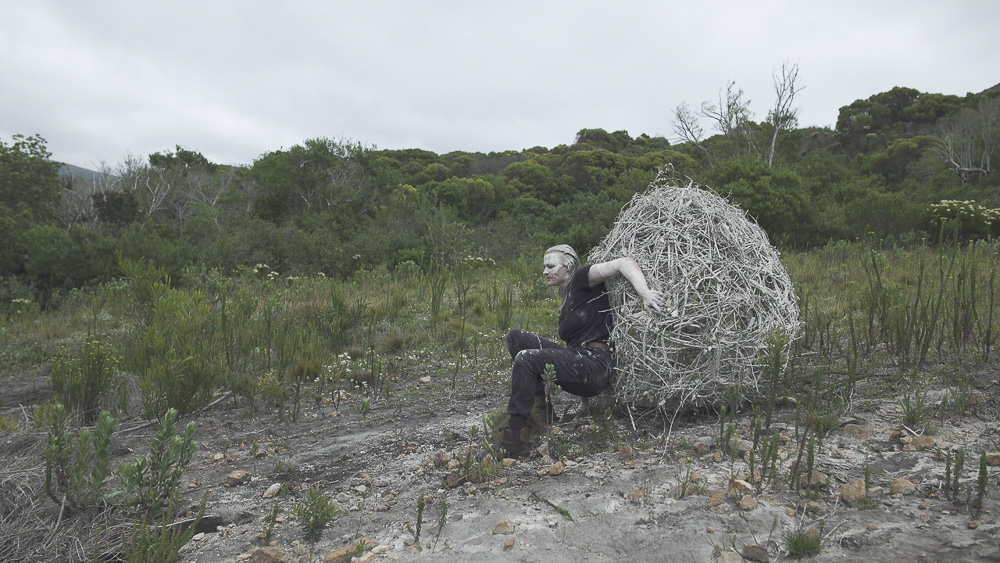
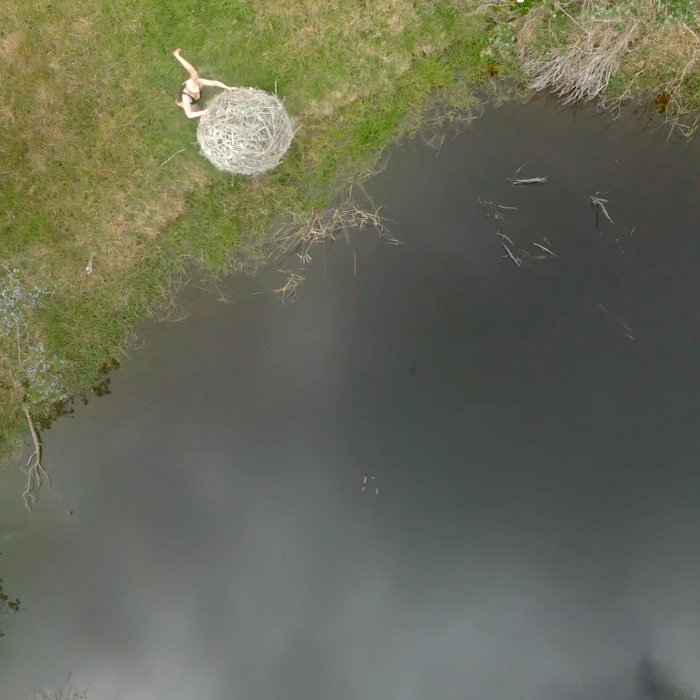
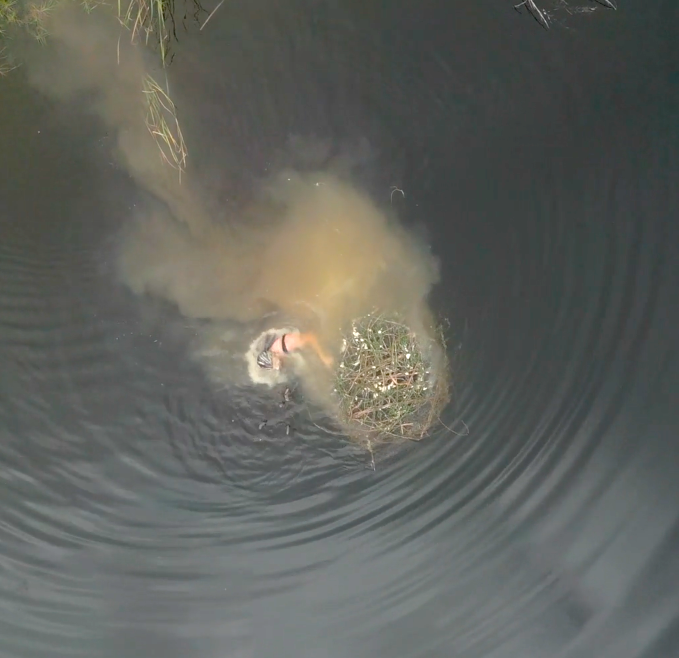
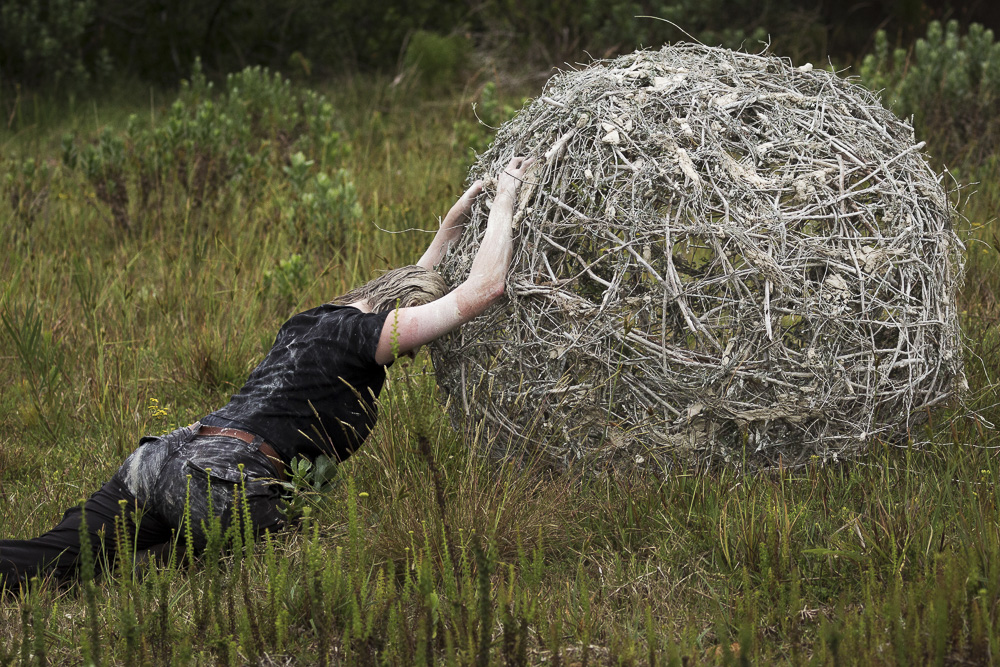
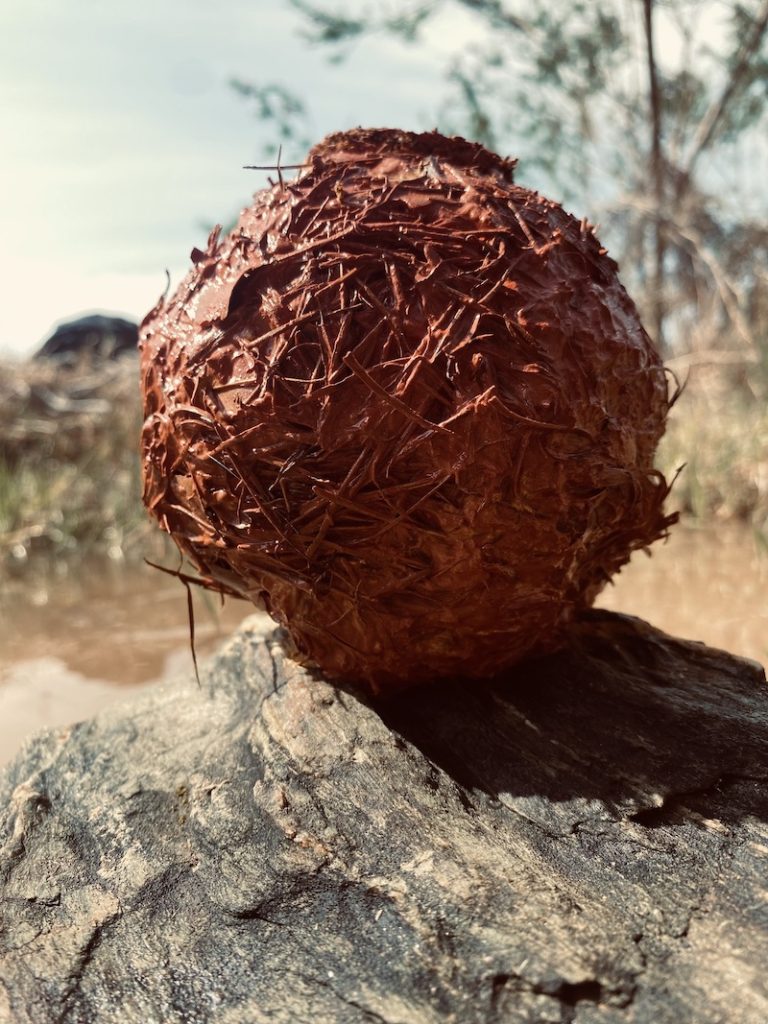
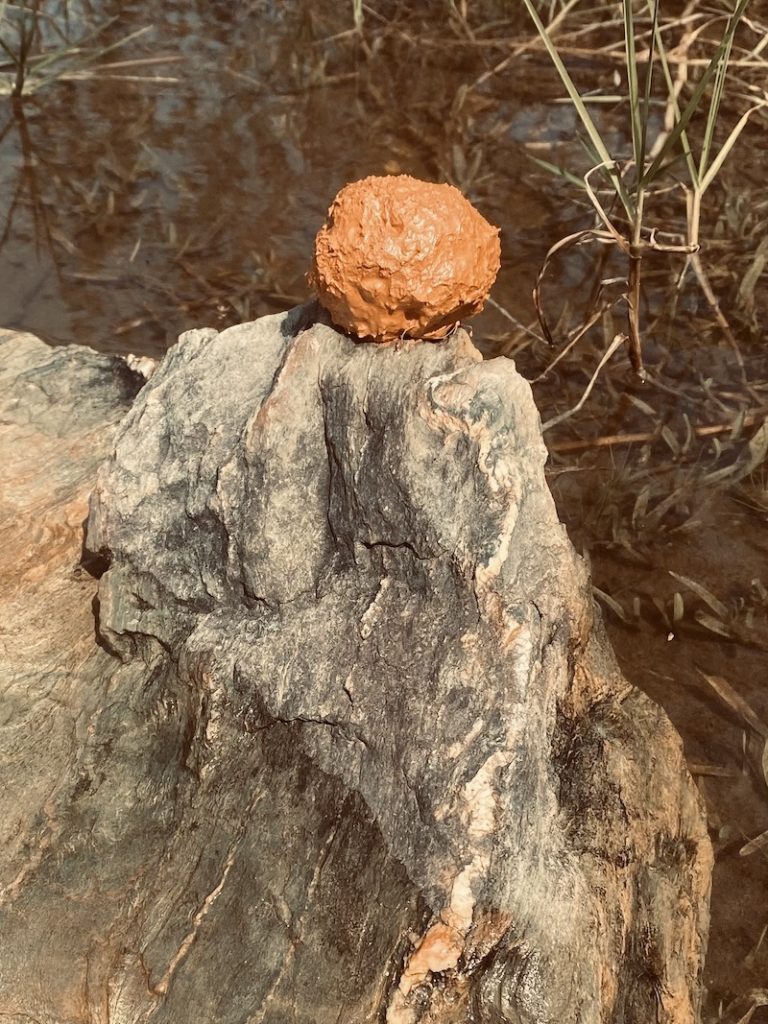
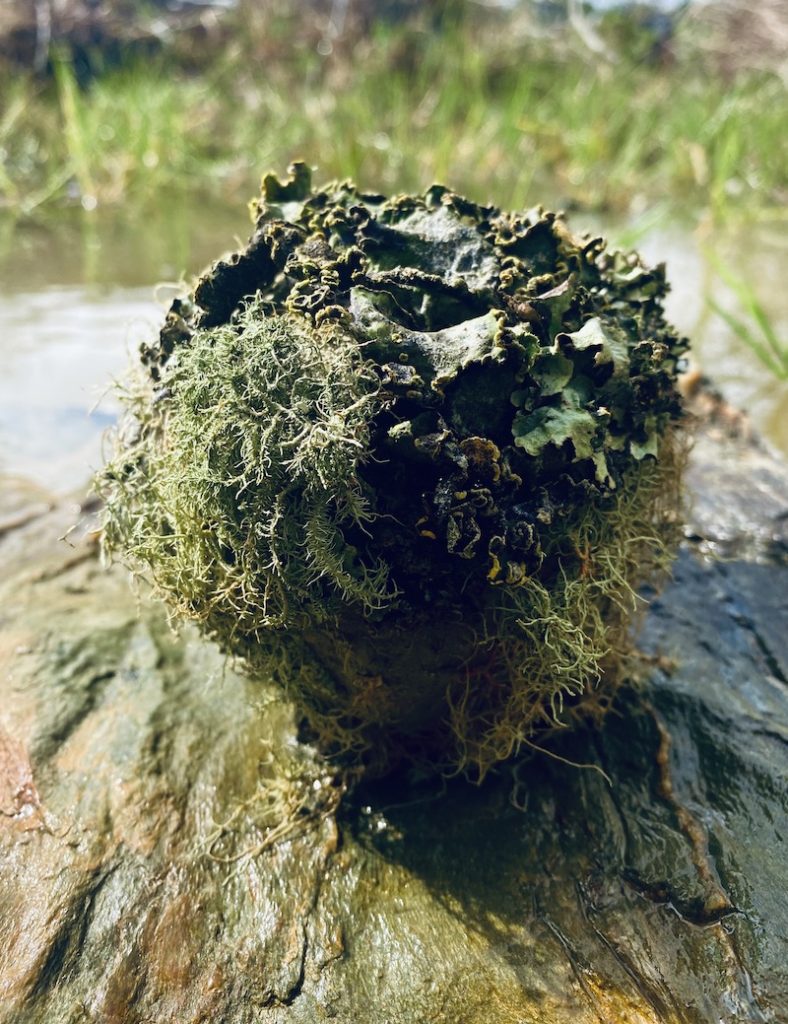
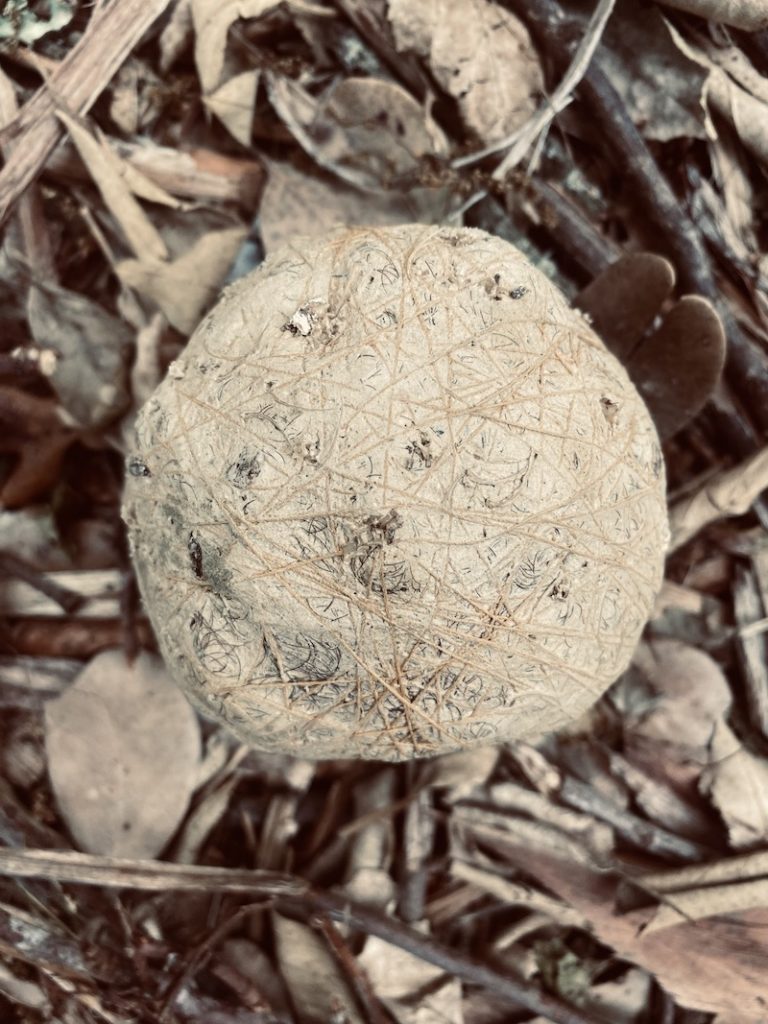
Invasive species, ancestral roots, and raw clay come together in Moving Kak, a mobile Land Art piece I created during my residency at Bodhi Khaya. This piece reflects on personal, ancestral, and environmental grief, layered into its spherical form. Through gathering and transforming these elements, I sought to honour the land while grappling with complex histories—both my own and those held by the earth. Inspired by the dung beetle, the process evolved into a performance, or rather, an offering where I rolled the artwork into a body of water, symbolizing transformation and surrender—a physical expression of release, reconciliation with the past, and the wild grace of embracing change.
Jann Saven
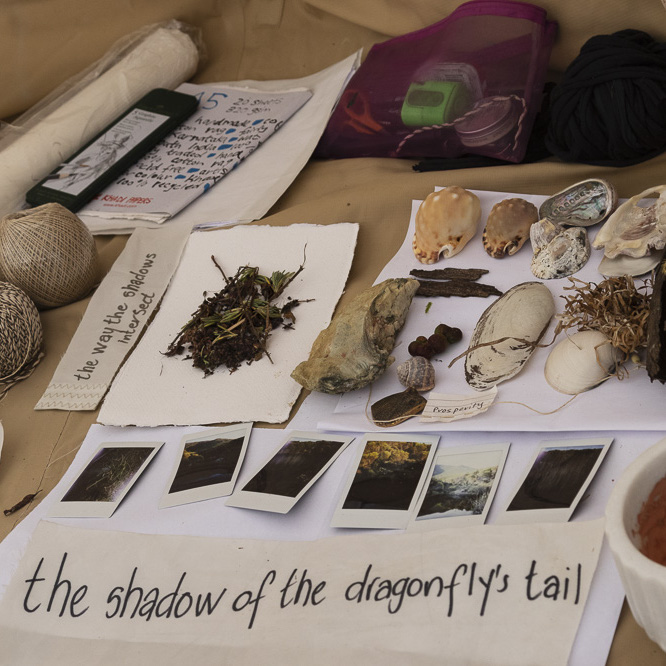
The shadow of the dragonfly’s tail
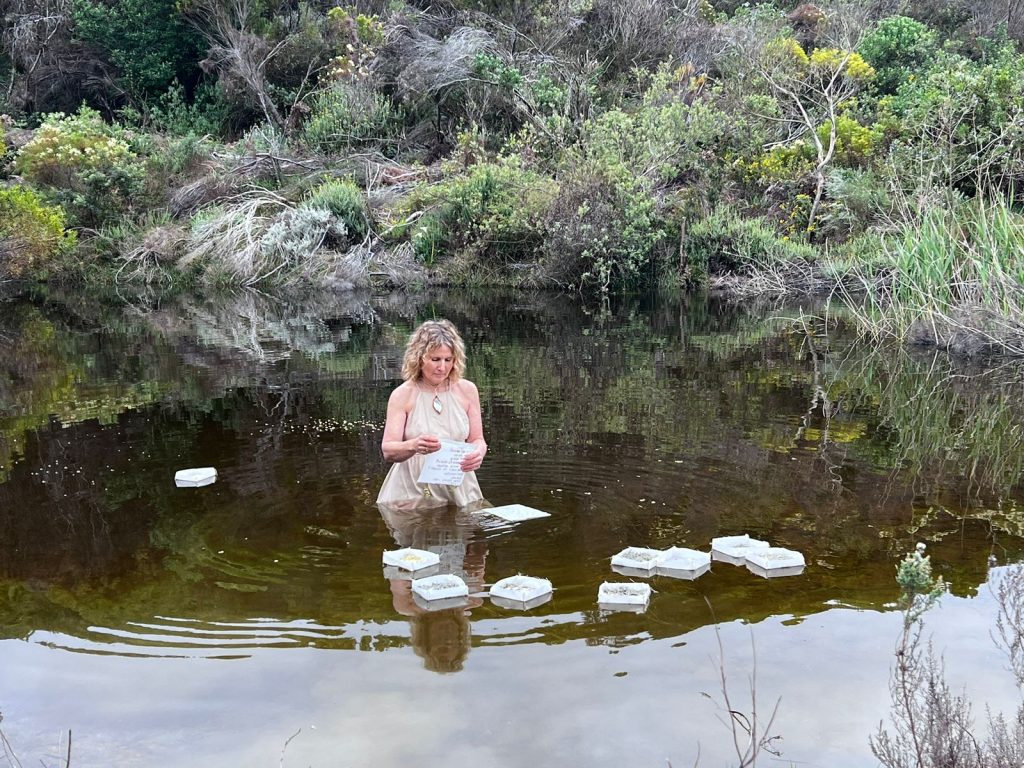
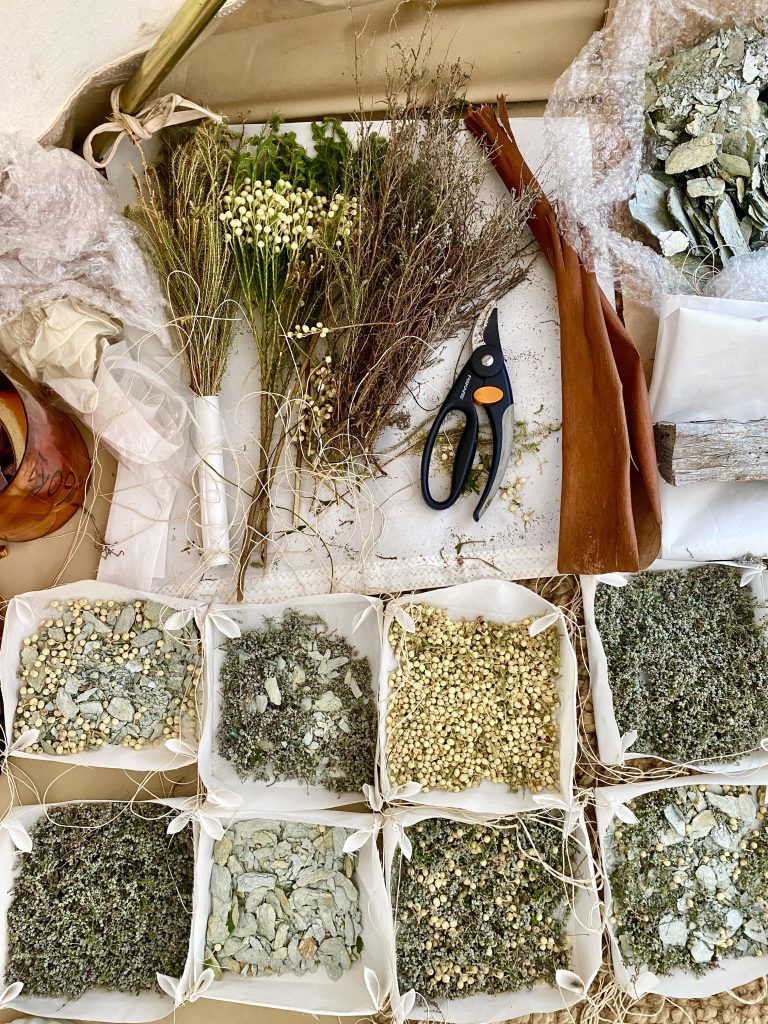
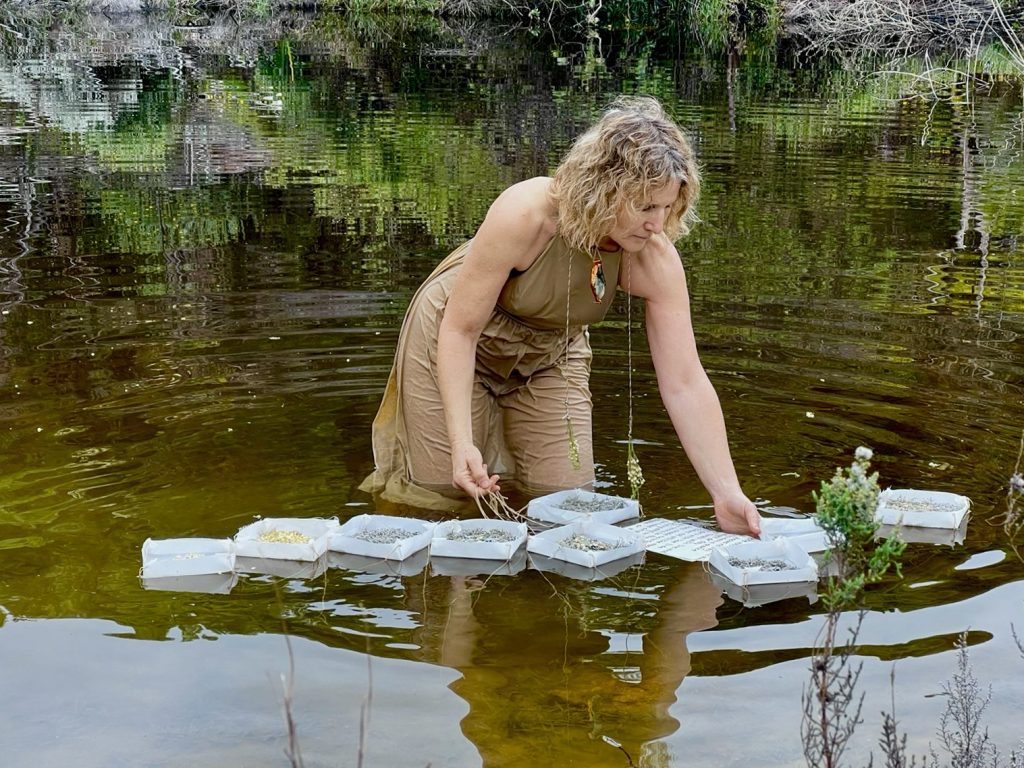
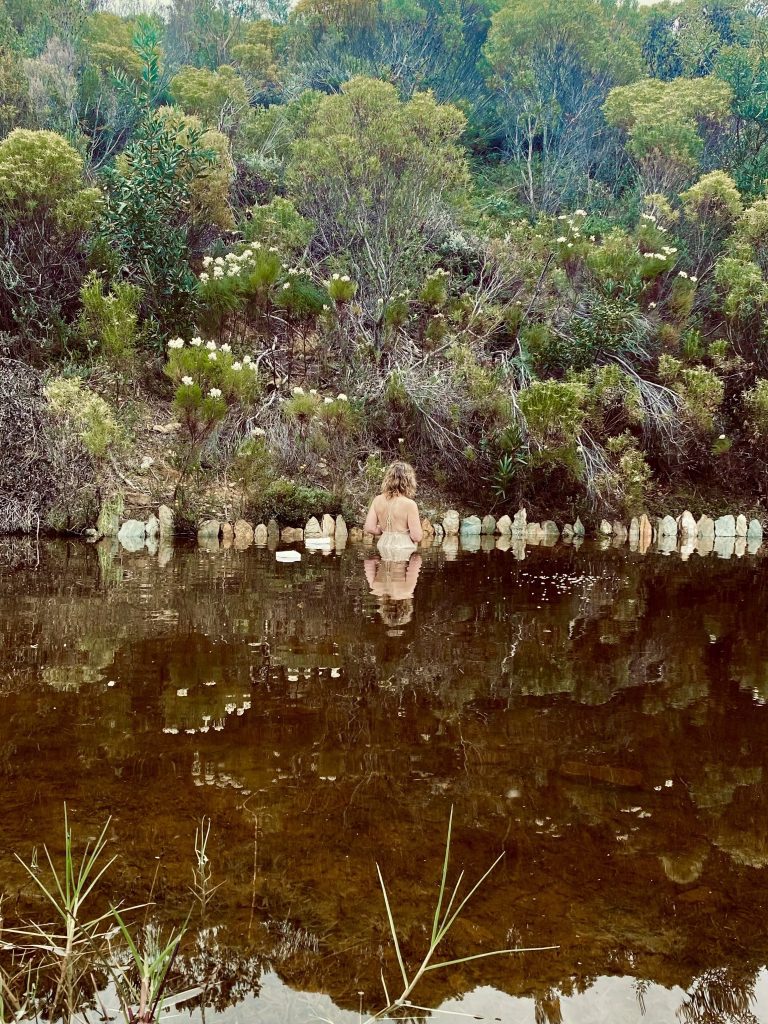
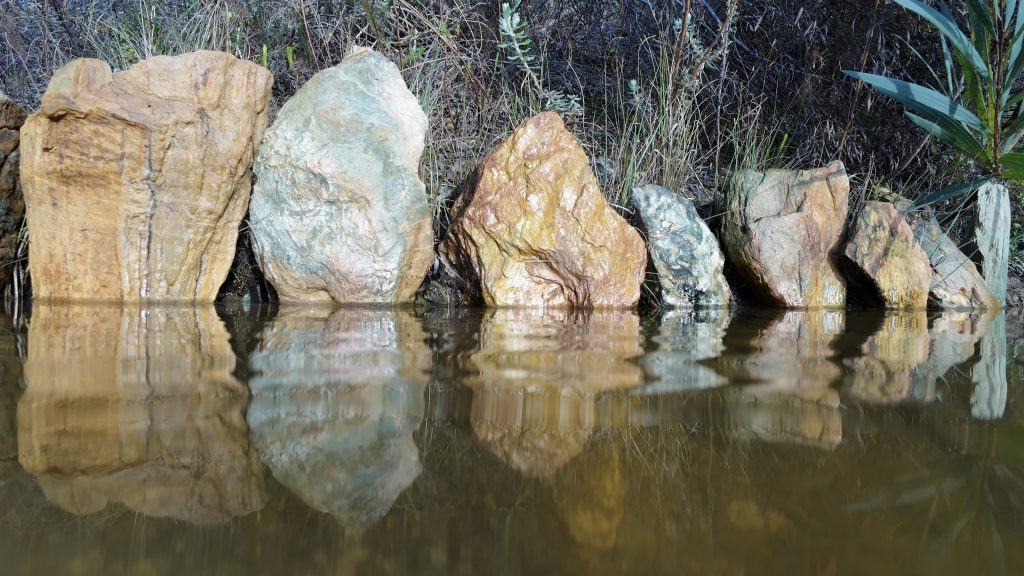
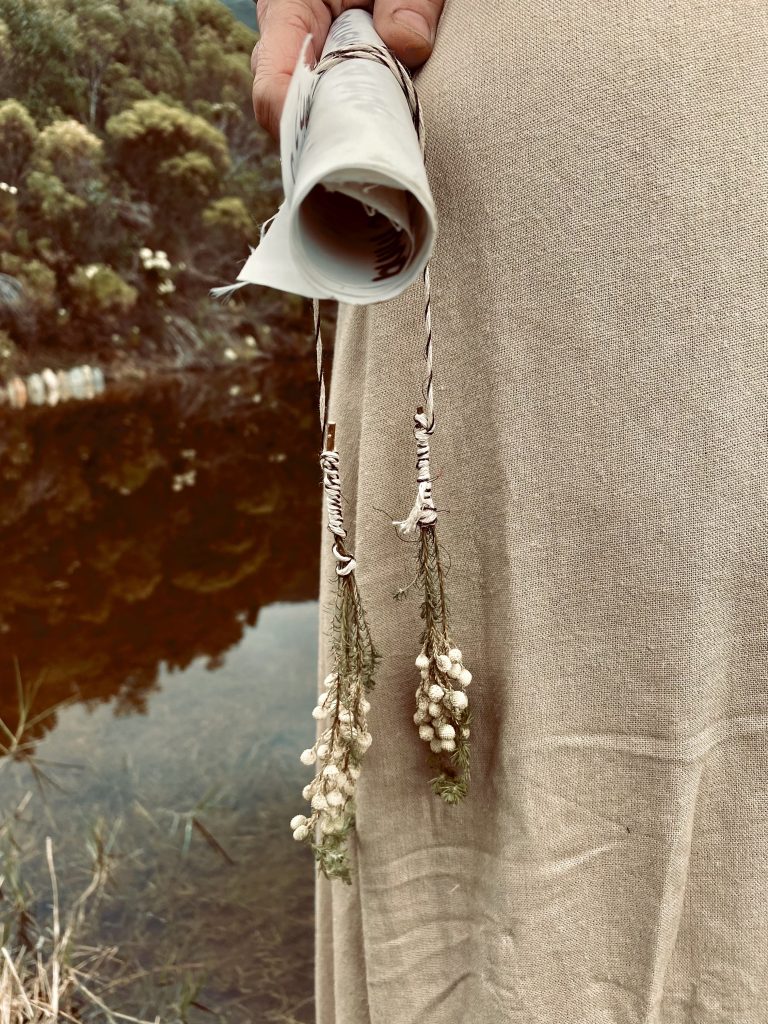
The ‘reveal of the present’, in my response to and exchange with the land at Bodhi Khaya, was stillness. This emerged at a seasonal body of water, known as the quarry dam. Engaging with the plant and mineral world, and the living creatures encapsulated within this dynamic and unique ecosystem, I worked predominantly with the resources that existed there. Indigenous flora, natural pigment and stones found submerged.
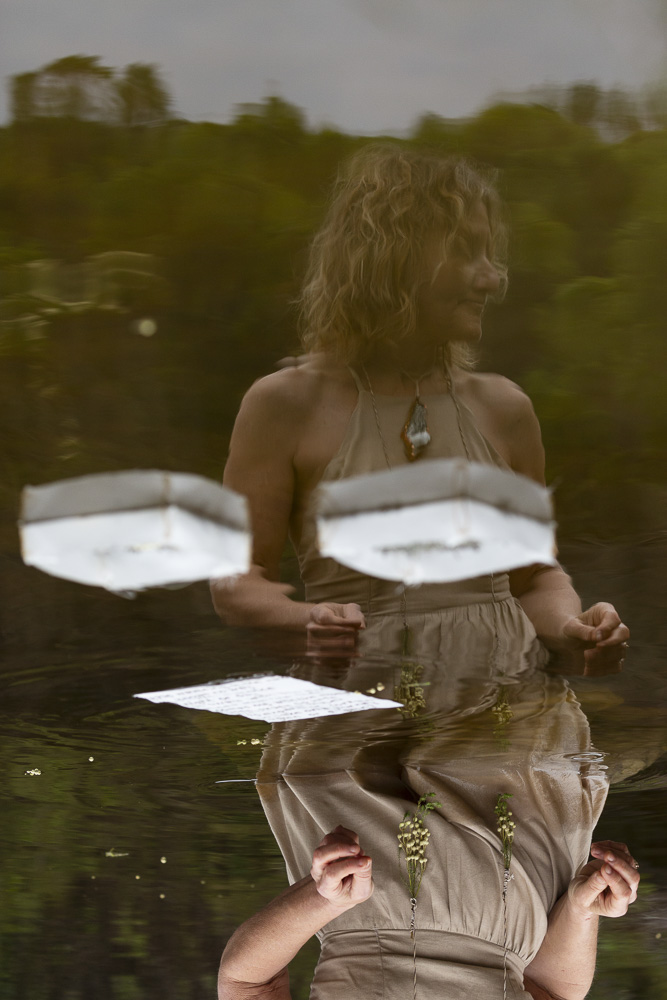
My residency culminated with a performance piece in the form of a poetry reading. A stone land art installation bridging land and water, a rudimentary neckpiece and floating vessels made from repurposed sailcloth filled with pigment, ‘slangbos’ and ‘kolkol’ accompanied. Immersed in the water, my recital was intended as an embodied prayer for peace, a prayer for the greater good of humanity and for a constructive collective consciousness.
The concept of the shadow of the dragonfly’s tail is a metaphor for life. Being a water-born insect, it rarely casts a shadow, mostly a reflection. It is symbolic of the elusive quality of life, the seeking, the reaching for that which resides within us all the time.
Sara Gouveia, SA, Portugal
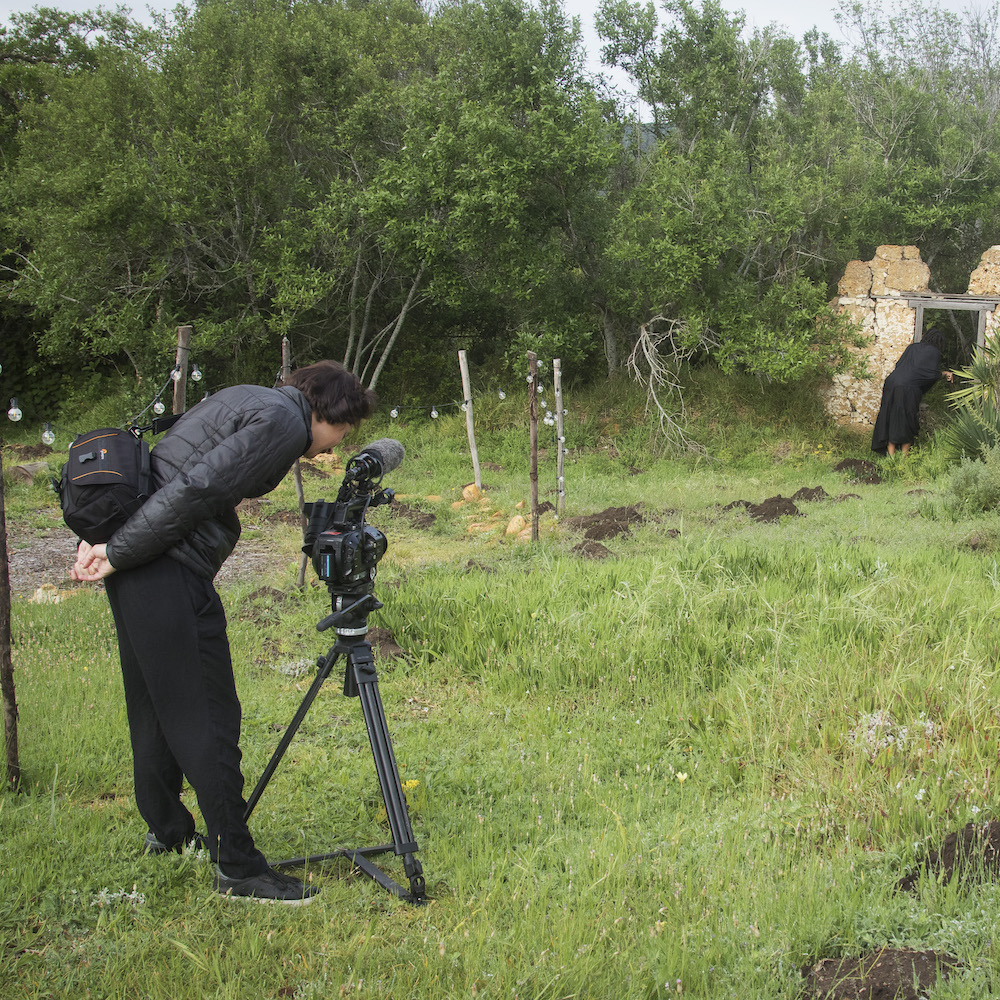
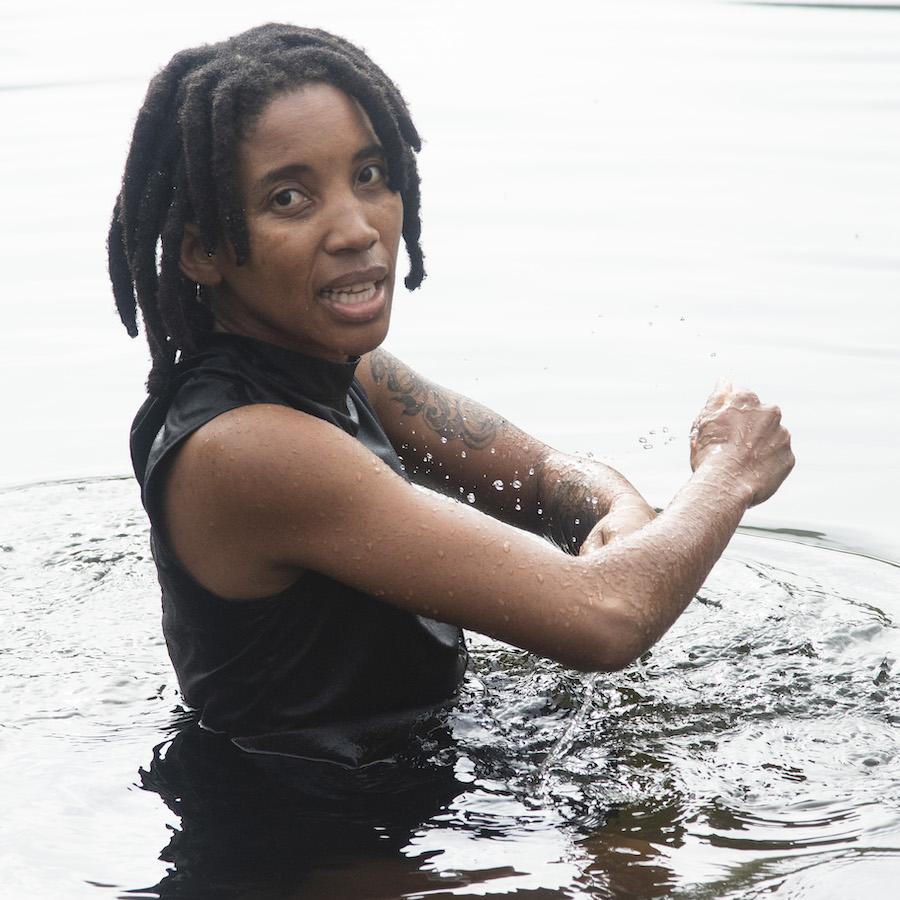
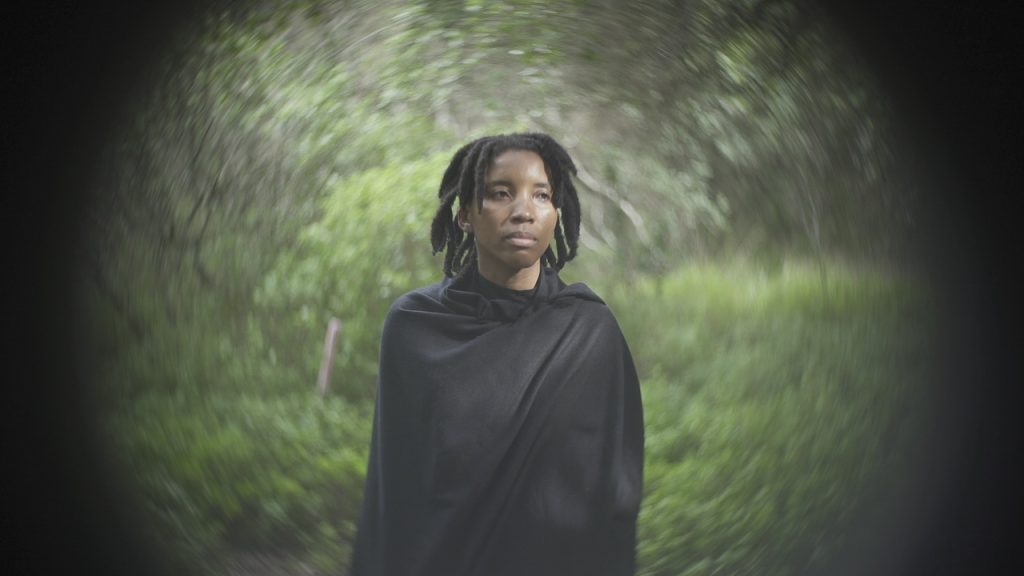
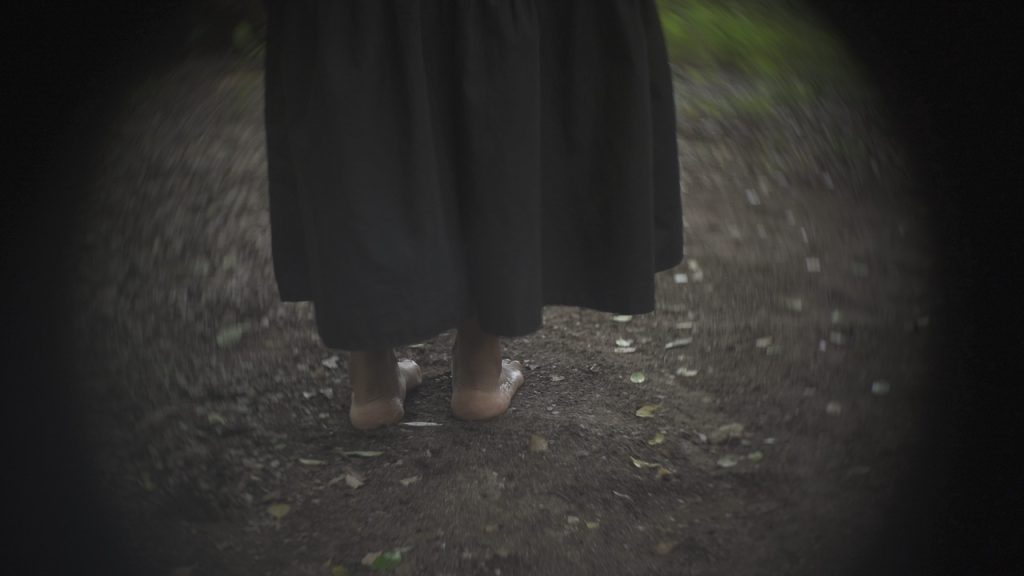
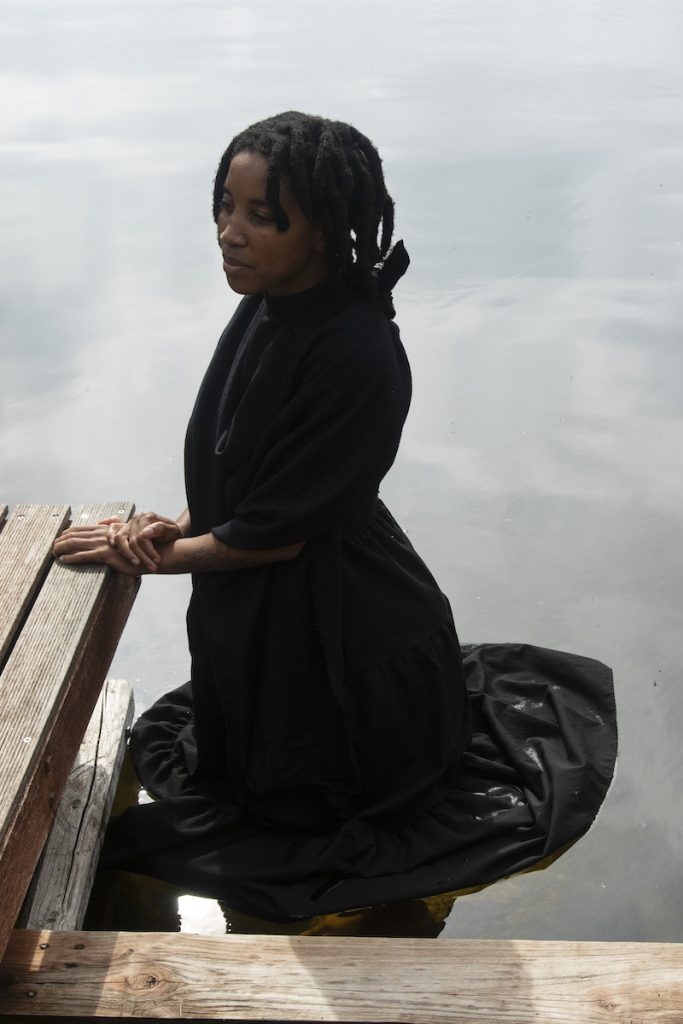
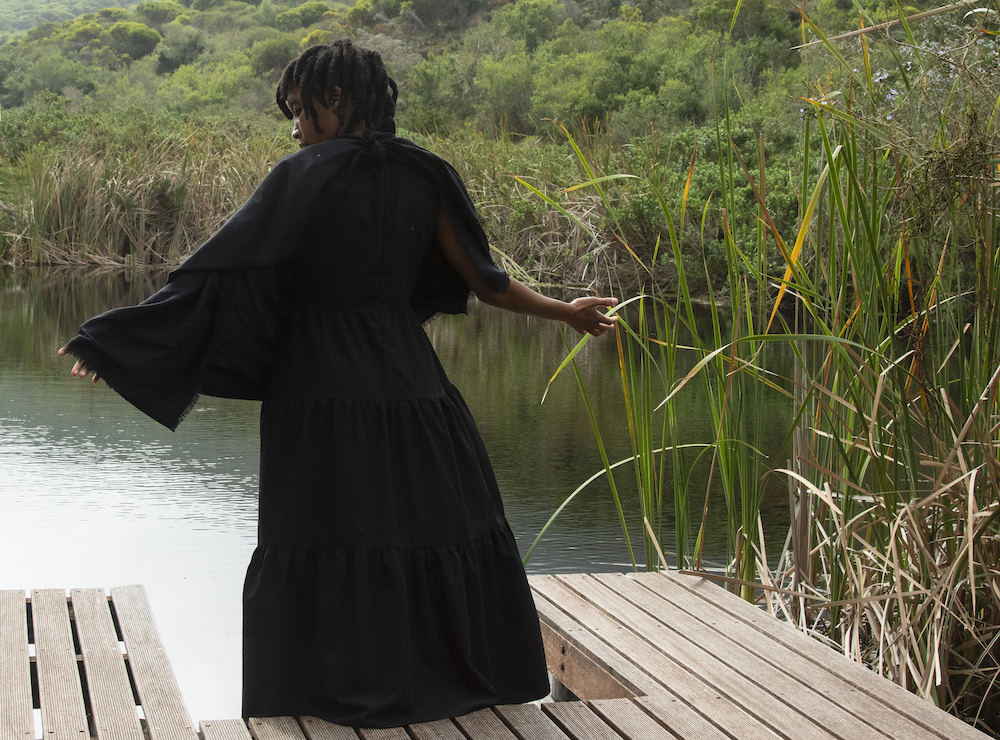
The Bodhi Khaya Residency was an amazing space for me to dive into my work, while offering a sense of community that’s not always easy to find in the fast pace of city life. I set out with some guiding questions around the concept of the land as a storyteller and with the intention of creating a video piece that would explore these ideas.
I spent my time capturing its shapes, sounds and spirit through a mix of audio recordings and visual explorations. I was very lucky to be able to work with actor Jane Mpholo in this video piece. Jane brought the Bodhi Khaya landscape to life, embodying its essence in a way that made it feel like the land was telling its own story through her. Through this collaboration we were able to create a more psychological piece, by interweaving an underlying sense of calm with a thread of unease throughout. The piece evokes a sense of longing through a journey of self-discovery: an universal aspect of the human condition.
The goal of this piece was to spark a sense of wonder and invite people to reflect on our fleeting existence and the deep connection we have with the natural world. By slowing down, we can sense the world’s flow around us and recognize how past, present, and future merge into one.
Tina Bester
“The release of the complicit feminine”
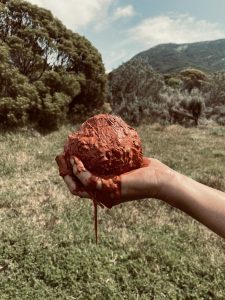
For the first time I just allowed the work and process to emerge and reveal itself. It was a very deep and personal process of the release of the complicit feminine within myself, and going back 7 generations in my matriarchal line in order to move forward in a different way.
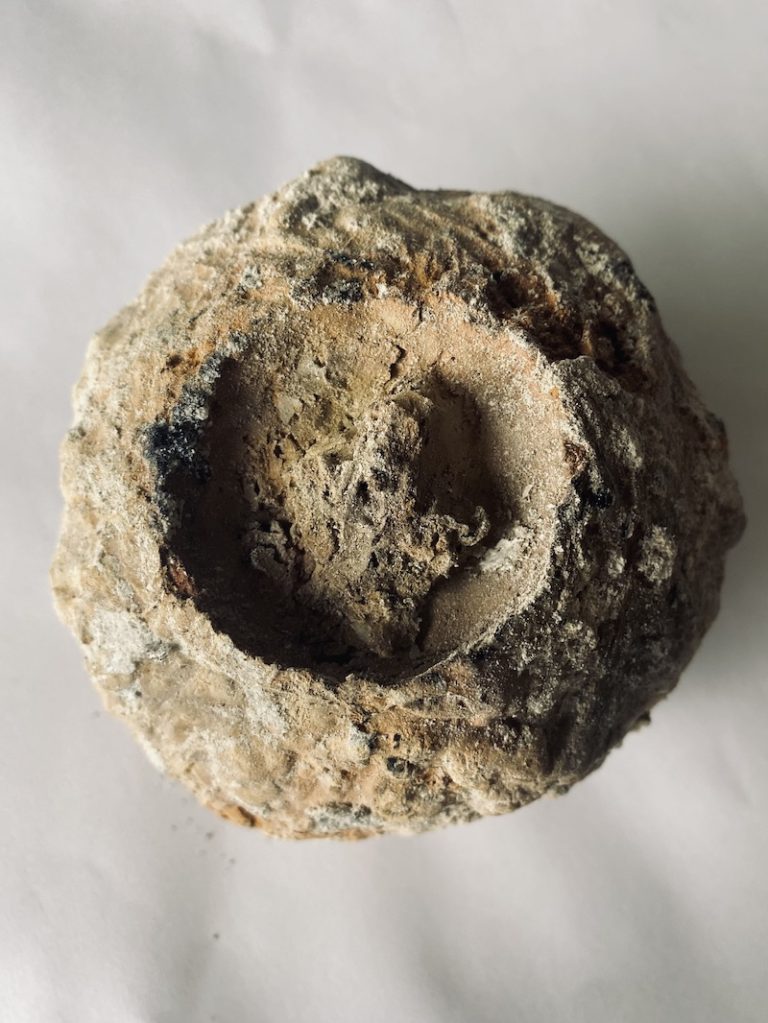
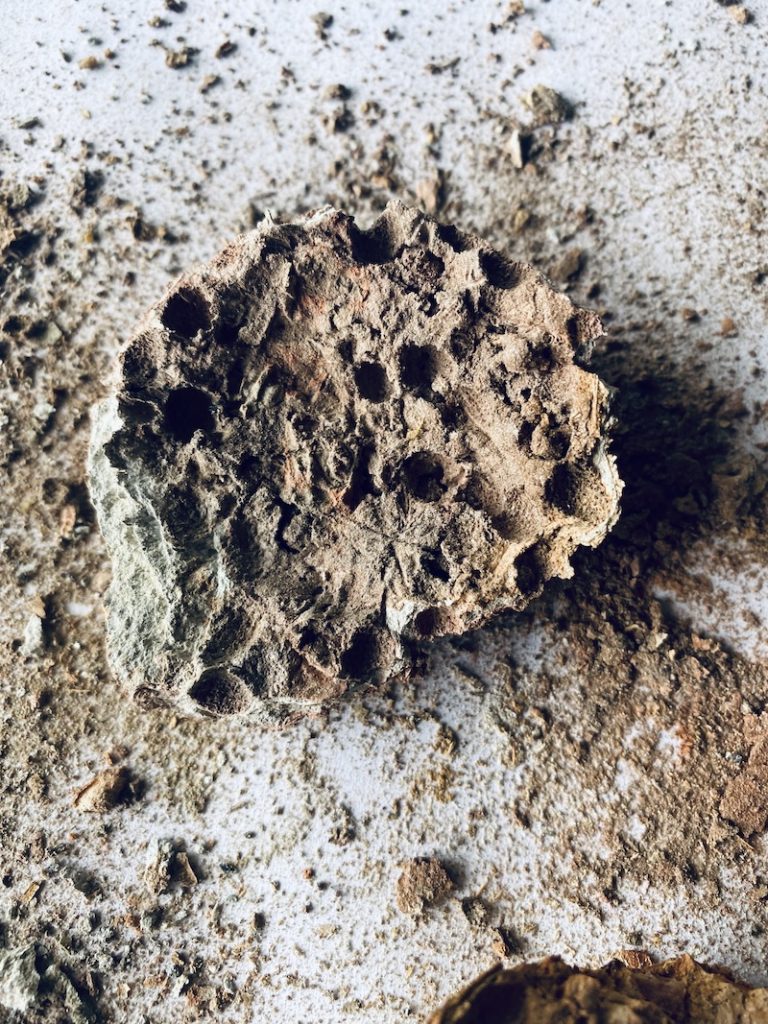
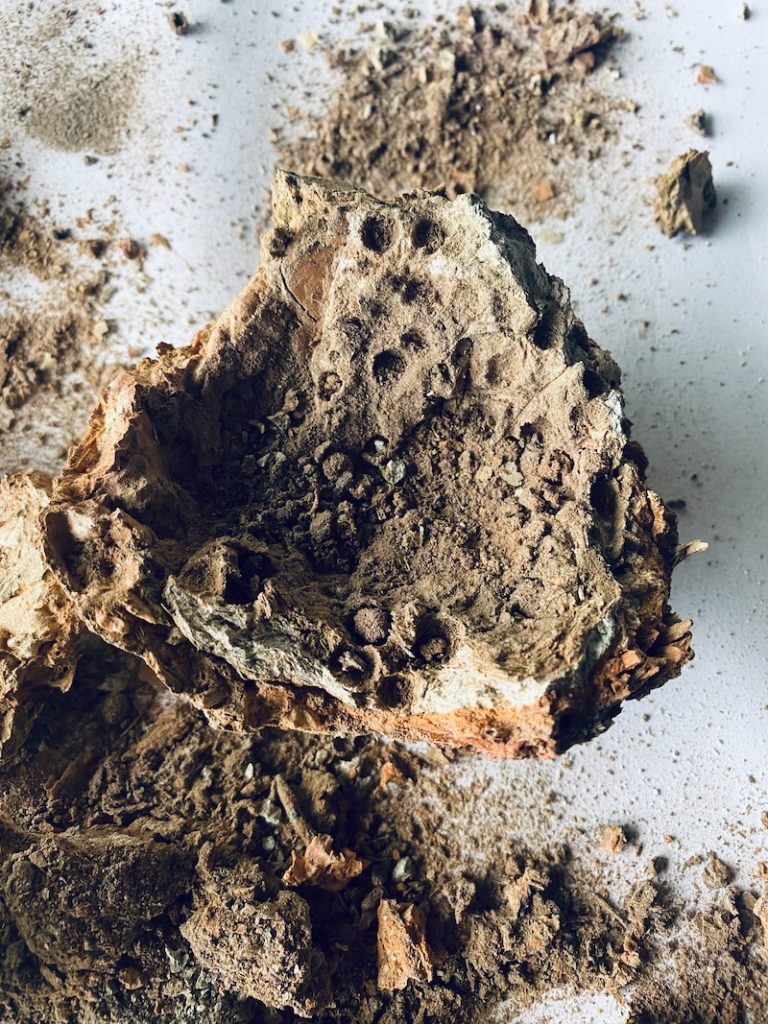
Using clay from the quarry as a representation of the feminine, I made seven layers, each with an element foraged from the land. The first was red clay with crab shells representing the mother, then yellow clay with Imphepho for my ancestors, green clay with Kol Kol bringing in unity and harmony and the middle layer was white with my hair and snake bones, bringing in strength and the creative force of transmutation. I then worked backwards with the same colour clays and brought in Lichens for the interconnectedness of all living beings, a porcupine quill for wisdom and foresight and Protea for courage in the transformation process.
With the red clay as the outer layer, very womb like, I carbonated the ball in a fire for 8 hours and cracked it open as a symbol of the Release.
Images and photography: Bronwen Trupp, Josie Borain, Tina Bester, Sara Gouveia, Ivukuvuku